

Cold is patient. It does not need a blizzard or a mountain to hurt someone — a car that slides into a ditch on a rural road, a furnace that fails overnight, a short walk taken in the wrong clothes. Winter survival is mostly won before anything goes wrong: knowing how hypothermia begins, dressing in layers that actually work, and keeping a simple kit in the car all season. This guide gathers the standard, widely taught winter safety guidance in one place. It is general information, not medical advice — and one rule leads everything else: in any real emergency, call emergency services first. If someone shows signs of serious hypothermia or frostbite, that call matters more than any home remedy in this article.
Hypothermia: The Threat That Whispers
Hypothermia happens when the body loses heat faster than it can produce it, and core temperature begins to fall. It does not require arctic weather — cool rain, wind and wet clothing can trigger it well above freezing. Recognize the stages:
- Early signs: persistent shivering, cold pale skin, numb fingers and toes, clumsiness, and wanting to just sit down.
- Worsening signs: shivering that slows or stops (a danger sign, not an improvement), slurred speech, confusion, poor decisions — victims have been found having removed clothing, a documented and tragic symptom of advanced confusion.
- In children and elderly people, signs may be subtler: unusual quietness, bright red cold skin in infants, or simple exhaustion.
Safe standard response: get the person out of wind and wet, into shelter. Remove wet clothing and replace it with dry layers and blankets, covering the head. Warm the core — chest, neck, groin — with wrapped warm (not scalding) heat sources or body warmth. Offer warm, sweet, non-alcoholic drinks only if the person is fully conscious and can swallow safely. Handle them gently, do not rub limbs vigorously, and get medical help — hypothermia is a medical emergency, and rewarming mistakes can harm.
Prevention is simpler than treatment: the same insulation principles that anchor our wilderness survival basics — dry layers, wind protection, ground insulation — apply on a city sidewalk exactly as they do on a trail.
Frostbite: The Other Cold Injury
Frostbite is the freezing of skin and tissue, most often in fingers, toes, ears, nose and cheeks. Early frostnip — numb, pale, tingling skin — is reversible with gentle warmth. True frostbite, where skin feels hard or waxy and blisters may later form, needs medical care. Standard guidance:
- Move to warmth and remove wet clothing, jewelry and anything tight near the area.
- Rewarm in warm — never hot — water if there is no risk of refreezing; refreezing thawed tissue causes far worse damage, so if you must walk to safety, it can be safer not to thaw a frozen foot first.
- Never rub the area, never use snow on it, and never apply direct intense heat like a stove or heating pad — numb skin burns without warning pain.
Dressing for Extreme Cold: The Layer System
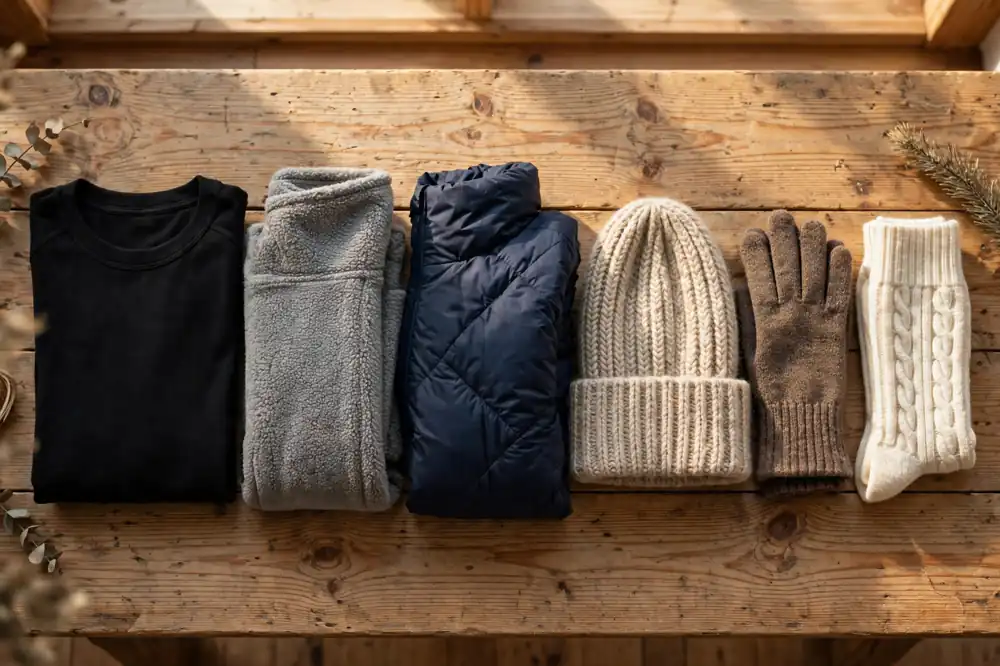
Cotton is winter’s trap: it absorbs moisture and then chills you efficiently — outdoor professionals summarize it as “cotton kills.” The system that works:
- Base layer: synthetic or merino wool against the skin, moving sweat away. No cotton.
- Mid layer: insulation — fleece or a puffy jacket — trapping warm air. Two thinner layers beat one bulky one for adjustability.
- Outer layer: windproof and waterproof shell, because wind strips heat faster than still air at the same temperature.
- Extremities: hat (major heat loss through an uncovered head in wind), insulated gloves or mittens (mittens are warmer), wool socks, and waterproof boots with room for toes to move.
- Adjust before you sweat. Sweating on the move means damp layers at the stop. Vent early, add layers the moment you pause.
The Winter Car Kit That Actually Gets Used
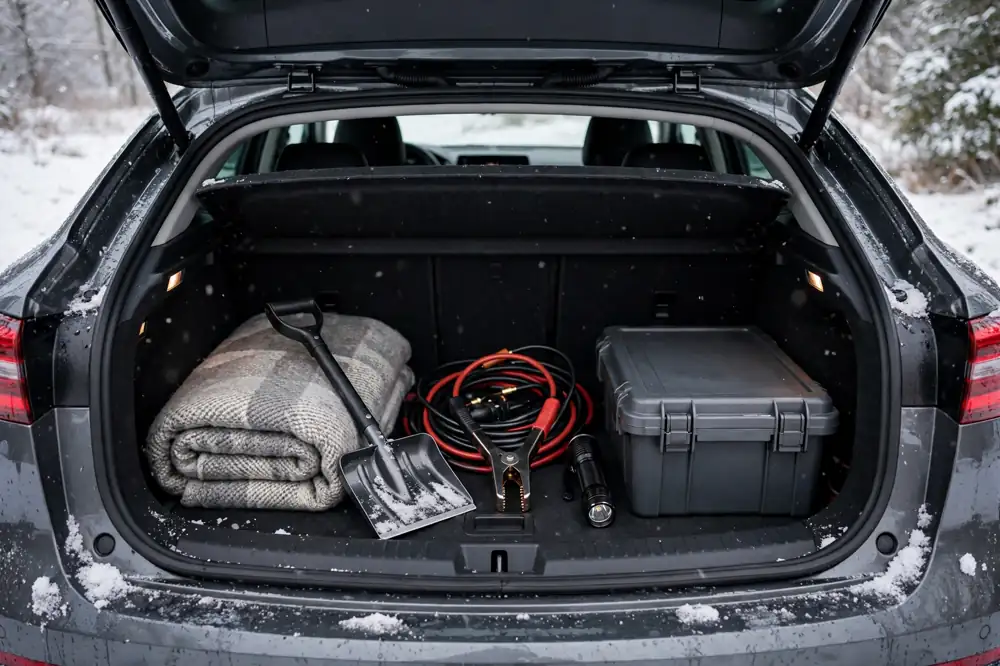
Most winter survival stories in developed countries begin in a car. Keep this kit in the trunk or cargo area from the first cold month to the last:
- Blankets or a sleeping bag, plus spare hat and gloves
- Flashlight with spare batteries, and a phone power bank
- Water (leave head space in bottles for freezing) and high-energy snacks
- A small shovel, an ice scraper and brush, and a bag of sand or cat litter for tire traction
- Jumper cables or a portable jump starter
- A bright cloth or flag to tie to the antenna or door handle if stranded — visibility is a signal
- Basic first aid kit, any essential medications, and a paper map for areas with poor signal
Top up the rest of the “kit” by habit: keep the fuel tank at least half full in deep winter, and tell someone your route and arrival time on long rural drives.
Stranded in the Car: The Safe Routine
If you become stranded in extreme cold and cannot safely reach help on foot, standard safety guidance is consistent: stay with the vehicle. A car is shelter, a large findable object, and where rescuers will look first — the logic of staying put runs through real rescue timelines, as our article on how to survive being lost explores.
- Call emergency services, give your location as precisely as you can, and then conserve your phone.
- Tie the bright cloth to the vehicle and clear snow from around the exhaust pipe — a blocked exhaust can fill the car with carbon monoxide.
- Run the engine only in short intervals (roughly ten minutes each hour is the common guidance) for heat, with the exhaust confirmed clear and a downwind window cracked slightly.
- Move your limbs periodically to maintain circulation, huddle under blankets, and ration energy rather than shoveling heroically in a storm unless a short, safe effort clearly frees the car.
- Walking for help in a blizzard is almost never the right choice — visibility drops to feet within yards of the vehicle, and people have become lost within sight of their own headlights.
Back home, the furnace-failure version of the same emergency is handled the same way: one warm room, layered clothing and blankets, pipes protected from freezing, and never — ever — indoor use of grills, camp stoves or generators. Those steps sit inside the broader home plan in our emergency preparedness at home guide.
Frequently Asked Questions
Can you get hypothermia when it is not below freezing?
Yes. Wind, rain and wet clothing can chill the body dangerously at temperatures well above freezing, especially during long exposure or exhaustion. This is why hikers in cool, wet weather are a classic hypothermia risk group.
Is it true that drinking alcohol warms you up?
No — it creates a false feeling of warmth while actually increasing heat loss and impairing judgment. Alcohol has no place in cold-weather survival care; warm, sweet, non-alcoholic drinks are the standard recommendation for conscious victims.
Should I eat snow to stay hydrated in winter?
Avoid it where possible. Eating snow lowers core temperature. Melt snow first if you have any container and heat source, and treat melted snow like other wild water sources — purify when you can.
How cold is too cold for pets outdoors?
Pets suffer hypothermia and frostbite too — ears, tails and paws first. In extreme cold, bring animals indoors, shorten walks, consider a coat for short-haired dogs, wipe paws after walks, and never leave a pet in a cold car. If it is too cold for you to stand outside comfortably, it is too cold for them to live out there.
The Bottom Line
Winter survival is a dress rehearsal you do in autumn: layers that work, a car kit assembled, hypothermia’s early signs learned, and the discipline to stay with shelter when trouble comes. Cold rewards the prepared and the patient — be both, and extreme weather becomes a story about a long night, not a tragedy.