
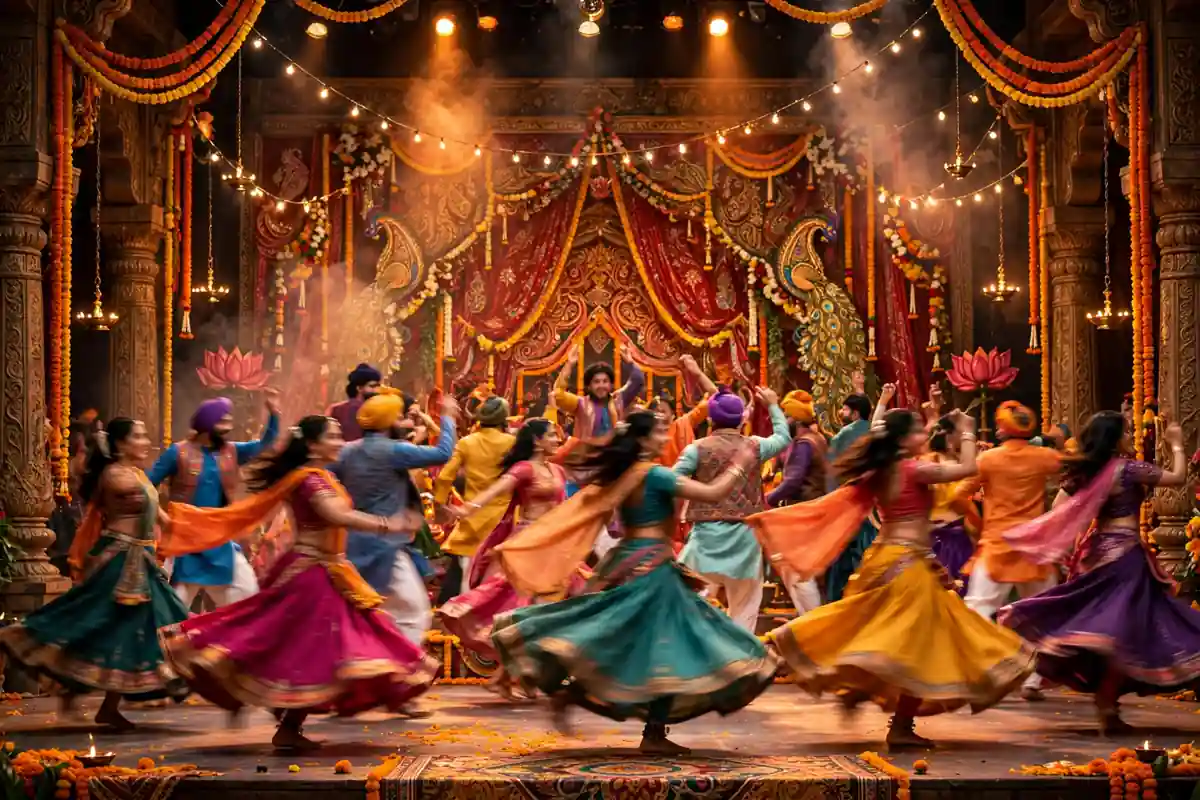
Bollywood gets the world’s attention, but the full picture of Indian cinema is richer: a Hindi industry famous everywhere, standing alongside regional industries whose biggest films now out-gross it in strong years — all bound together by music, festival-sized fandom and, increasingly, a global streaming audience. This article explores the culture around the films: why songs are an industry of their own, how fans turn releases into festivals, and how audiences from Toronto to Dubai to London’s suburbs became part of the story. For the structural map of industries and languages, start with our companion guide, Indian cinema explained.
Bollywood: What the Word Really Means
Bollywood refers specifically to Hindi-language cinema centered in Mumbai. Its hallmarks, refined over decades, include star-led storytelling, emotional family drama woven through other genres, dialogue written to be quoted, and song sequences integrated into the narrative. Its stars are not merely actors but national celebrities whose off-screen lives — weddings, friendships, feuds — form a parallel entertainment industry of their own.
What surprises many newcomers is Bollywood’s range: the same industry produces broad comedies, intimate dramas, historical epics and gritty crime films, sometimes from the same director in consecutive years. The song-and-dance image is real but partial — closer to a signature than a summary.
Regional Cinema: The Federation Steps Forward
The regional industries — Telugu, Tamil, Malayalam, Kannada, Bengali and others — each carry distinct reputations. Malayalam cinema is praised for grounded, realistic storytelling. Telugu cinema has driven the current wave of large-scale spectacle. Tamil cinema blends strong director identities with fervent star culture. Bengali cinema holds one of the world’s great art-film heritages.
The modern turning point is the collapse of the old hierarchy. Dubbing, subtitling and streaming mean a regional film no longer needs Hindi cinema’s permission to reach India — or the world. National audiences now follow directors and stars across languages, and a hit can ignite anywhere in the federation.
Music: The Second Industry Inside the First
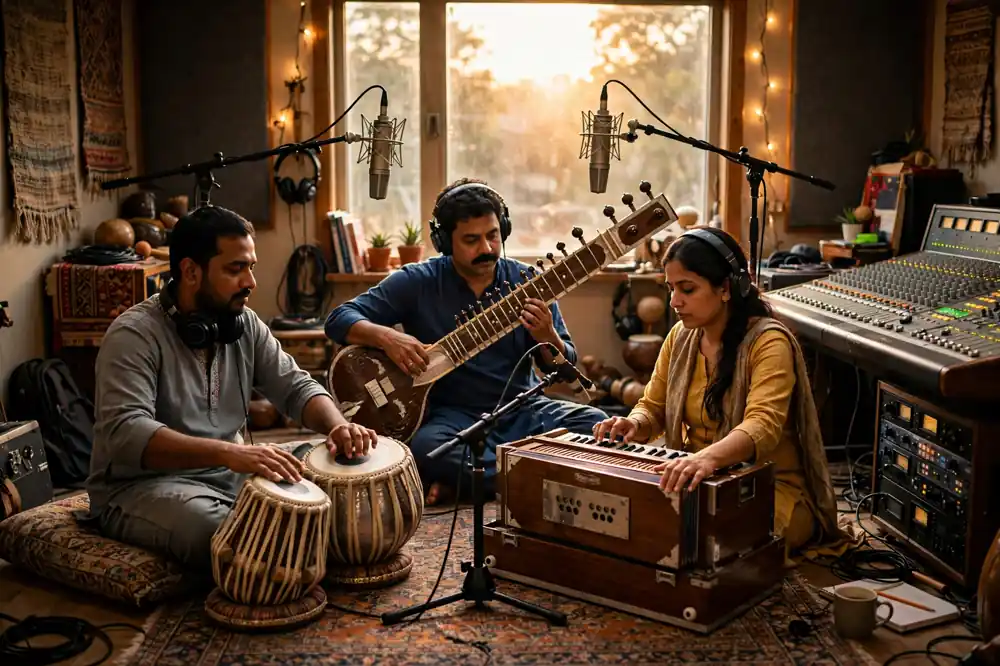
In Indian cinema, music is not a soundtrack — it is a parallel release, a marketing engine and, for many films, the first thing the audience ever experiences.
- Songs launch first: soundtracks typically release weeks or months before the film, building familiarity so audiences arrive already humming.
- Playback singers are stars: the voices behind the songs have their own celebrity, fan bases and concert circuits, distinct from the actors who lip-sync on screen.
- Music rights are big business: soundtrack rights are a significant revenue stream, now supercharged by streaming platforms and short-video trends.
- Songs travel farther than films: a hook step or chorus crosses language barriers effortlessly, which is why Indian film songs routinely trend in countries where the film itself never screened.
A flop film with a hit album can still profit; a good film with forgettable music starts its run with a handicap. Composers and lyricists are therefore cast as carefully as actors.
Festivals, First Days and Fan Culture
Indian film culture treats releases as public celebrations. The “first day, first show” is an institution: fan clubs book entire early screenings, decorate cinema entrances, and celebrate a star’s arrival on screen with whistles, confetti and applause loud enough to drown the dialogue — which is considered part of the experience, not a disturbance.
Film festivals add the other pole of the culture. India’s festival circuit, and the presence of Indian films at major international festivals, showcases the industries’ serious cinema: independent, regional and experimental work that wins critical prizes abroad even when domestic audiences overlook it. The coexistence is the point — the same ecosystem produces both the loudest commercial spectacles on earth and quietly perfect small films.
Fan devotion, especially in the south, goes further than anywhere else in world cinema: fan associations run charitable activities in stars’ names, birthdays become public events, and in a famous tradition, fans pour milk over giant cutouts of stars on release day as a blessing. Studios court fan clubs as organized marketing forces, seeding them with posters, teasers and early content.
Streaming: The Global Living Room

Streaming rewired Indian cinema’s geography. The Gulf, North America and the UK were always strong diaspora markets, but platforms now deliver films the same day worldwide, subtitled, to anyone curious — and the economics follow the pattern we break down in how movie streaming services make money.
Consequences fans can see:
- Regional films find global niches: a Malayalam thriller or Kannada epic can build word-of-mouth across continents within a weekend
- Shorter waits: the long gap between cinema release and home viewing has collapsed for most titles
- New formats: web series — long-form storytelling once impossible in Indian film formats — have become a creative home for writers and actors, with regional-language series building loyal followings
- Data shapes decisions: platforms commission based on measured viewing, pushing both more variety and more formula, depending on what the numbers reward
The Global Fan: Who Is Watching Now
The new Indian cinema audience includes the diaspora’s second generation discovering films in subtitled streams their parents watched in theaters — plus genuinely new audiences with no Indian connection at all, drawn by spectacle, music and storytelling styles that feel different from Hollywood defaults. Fan communities translate interviews, run subtitling efforts and create the clip culture that introduces films to the next viewer. In the current ecosystem, fans are not the end of the distribution chain; they are a working part of it.
Frequently Asked Questions
Why do Bollywood films have songs in the middle of serious scenes?
Because music is structural, not decorative. Songs mark emotional turning points, compress time, and give audiences the melodies they carry out of the cinema. The tradition comes from Indian theater and folk performance, and audiences expect major films to deliver on it.
Are regional films really more successful than Bollywood now?
In several recent years, yes — the biggest Indian hits have come from the Telugu, Kannada and Tamil industries, and combined regional earnings have rivaled or exceeded Hindi cinema’s. The lead changes year to year; what has changed permanently is that it is a contest at all.
What is “first day, first show” culture?
The organized fan rush to watch a star’s film at its earliest screening on release day, treated as a festival: decorations, celebrations, and social media coverage. Opening-day numbers are a major industry scoreboard, and fan clubs compete to make them historic.
Where can international viewers start with Indian cinema?
Begin with your genre, not with famous names: a subtitled thriller, epic or drama from any industry that sounds appealing, then follow the director or star you enjoyed into their other work — across languages. Streaming catalogs make crossing between industries effortless.
The Bottom Line
Bollywood is the billboard, but Indian cinema is the city behind it: many industries, one shared culture of music and celebration, and a fan base that now spans the planet. Streaming did not shrink that culture to fit the world — it handed the world a front-row seat.