
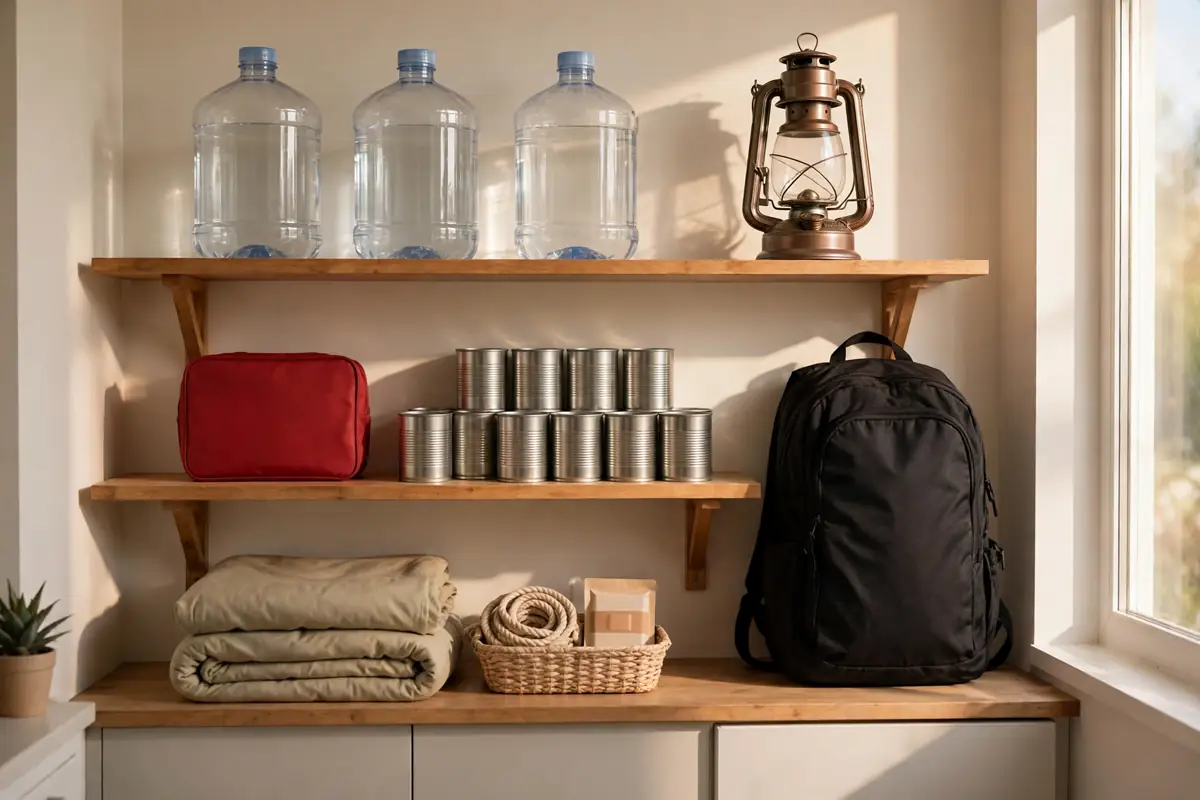
Most emergencies do not happen in the wilderness. They happen at home: a storm knocks out power for two days, a water main breaks, a flood or fire means leaving in twenty minutes, or an accident happens in the kitchen on an ordinary Tuesday. Emergency preparedness at home is not about fear or bunkers — it is about a modest amount of stored water, a plan for power cuts, a usable first aid kit, and a packed go-bag, so that a disruption stays an inconvenience instead of becoming a crisis. This guide walks through each piece in plain, standard guidance used by emergency agencies worldwide. And if someone in your household is hurt or in danger at any point, call emergency services first — preparation supports professional help, never replaces it.
Water Storage: The Foundation of Everything
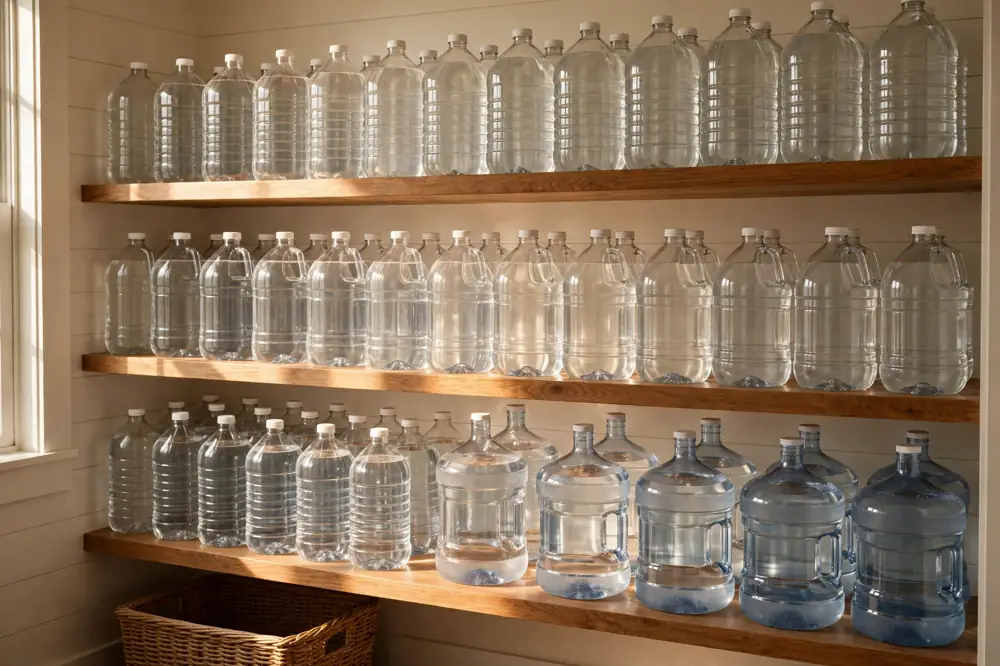
Water is the one supply you cannot improvise. Emergency guidance commonly recommends storing at least one gallon per person per day, for a minimum of three days — one part for drinking, one part for hygiene and cooking. A practical plan:
- Store commercially bottled water in a cool, dark place, and rotate it by the printed dates.
- Or fill food-grade containers from the tap, label them with the date, and refresh them roughly every six months.
- Add a water filter or purification method as a backup layer, so a longer disruption does not empty your margin.
- Know your hidden reserves: the water in your home’s water heater and pipes is usable in a genuine emergency, and your freezer keeps food cold longer if you leave the door shut.
Do not forget pets in the calculation — animals need stored water too, and rescue-minded households will recognize the parallel with the outdoor priorities in our wilderness survival basics guide: hydration first, always.
Alongside water, keep a shelf of shelf-stable food your household actually eats — canned goods, rice, pasta, nut butters, energy bars — plus a manual can opener. Food you would never touch in normal life tends to stay untouched in an emergency, too.
Power Cuts: Comfortable, Safe, and Bored in the Right Way
Extended outages are the most common home emergency in many regions. Prepare for them on four fronts:
Light and information
- A flashlight or lantern for every household member (headlamps keep hands free), plus spare batteries.
- A battery or hand-crank radio for official updates when networks fail.
- Power banks kept charged, and a car charger as backup.
Food safety
- A closed fridge keeps food safe for roughly four hours; a full freezer for about two days, a half-full one about half that. When in doubt about perishable food after an outage, throw it out — food poisoning is an emergency of its own.
- Eat perishables first, shelf-stable food last.
Warmth and cooling
- Blankets, sleeping bags and layered clothing for cold-weather outages; never use outdoor grills, camp stoves or generators indoors or in a garage — carbon monoxide from these is a silent, well-documented killer. Generators belong outside, well away from windows.
- In heat waves, plan the coolest room, light clothing, steady hydration, and checks on elderly neighbors and relatives.
Medical needs
- If anyone depends on powered medical equipment or refrigerated medication, talk to their doctor or pharmacist now about backup plans, and register with your utility’s priority services if offered.
First Aid: A Kit You Can Actually Use
A first aid kit earns its shelf space when it matches real household injuries — cuts, burns, sprains, allergic reactions — and when someone in the house knows the basics. A sensible kit includes:
- Adhesive bandages in assorted sizes, sterile gauze pads, adhesive tape and elastic bandages
- Antiseptic wipes or solution, antibiotic ointment, and tweezers
- Disposable gloves, safety pins, and small scissors
- Pain relievers and any household-specific items: antihistamines for allergies, an epinephrine auto-injector if prescribed, oral rehydration salts
- A digital thermometer and a basic first aid guide
Check the kit twice a year, replacing expired items. Then go one step further: basic first aid and CPR training is inexpensive, widely available, and the single most valuable “supply” a household can own. In any serious injury or medical emergency, call emergency services before reaching for the kit.
Go-Bags: Leaving Home in Twenty Minutes
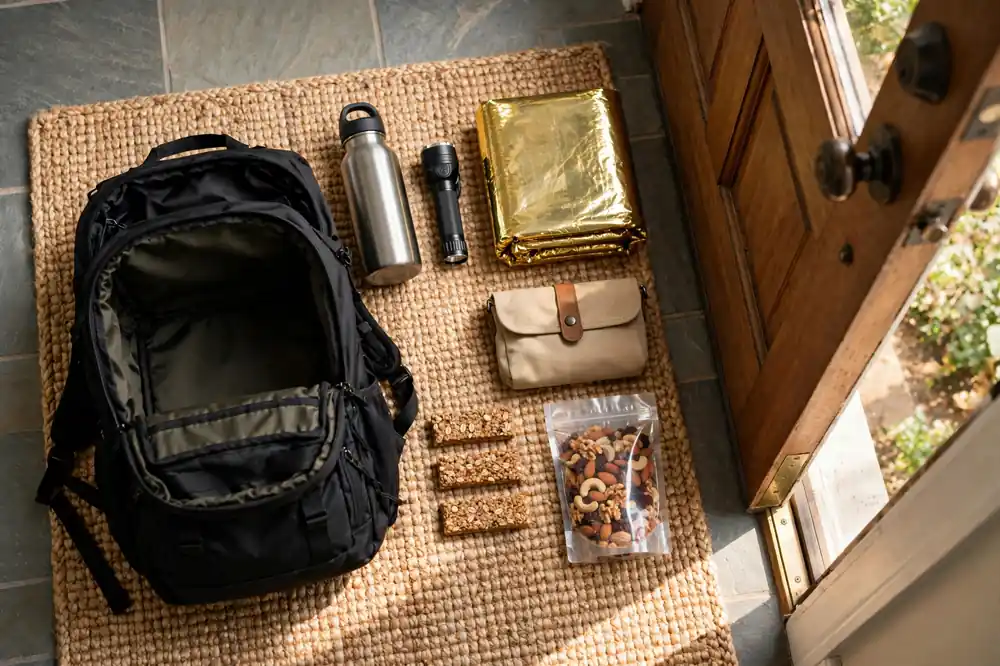
Some emergencies — fire, flood, gas leak, evacuation orders — mean walking out fast. A go-bag per person, packed in advance and stored by the door or in the car, turns panic into a checklist:
- Water and compact food for at least a day or two
- Change of clothes, sturdy shoes, warm layer and rain protection
- Medications (a few days’ supply), glasses or contact supplies, and essential toiletries
- Phone charger and power bank, flashlight, whistle and a small amount of cash in small bills
- Copies of key documents — ID, insurance, medical information — in a waterproof pouch, with digital copies backed up securely
- Comfort items for children, and for babies: diapers, wipes, formula or food as needed
Do not forget the animals. Pet go-bags deserve the same thought: a few days of food, bottled water, a spare leash and collar with ID, any medications, vaccination records, a photo of you with your pet (proof of ownership), and a plan for carriers or crates. Households that adopt from shelters already know how much paperwork matters — our look at how animal rescue works shows why records speed up reunions. If your pet slips away during the chaos of an evacuation, work our first 24 hours lost pet checklist as soon as it is safe to do so.
The Plan That Ties It Together
Supplies without a plan underperform. Spend one household conversation covering:
- Two ways out of the home and a meeting point outside.
- An out-of-area contact everyone can call or text if local networks fail.
- Shut-offs: where the water, gas and main electrical switches are, and who can operate them safely.
- Who grabs what: the go-bags, the pets, the medication, the document pouch — assigned in advance, not debated at the door.
- A review date: check supplies, batteries, water and bag contents every six months. Set it alongside changing clocks or smoke-alarm batteries so it actually happens.
Frequently Asked Questions
How much water should I really store?
The standard minimum is one gallon per person per day for at least three days, covering drinking and basic hygiene. Households with the space often build toward two weeks of supplies overall — water, food and essentials — which matches guidance for larger regional disruptions.
What foods are best for an emergency shelf?
Shelf-stable foods your household already likes: canned vegetables, beans, tuna and soups, rice, pasta, oats, nut butters, dried fruit and energy bars. Rotate them into normal meals before they expire so nothing is wasted and nothing on the shelf is unfamiliar.
Where should go-bags be kept?
Where you can grab them on the way out: a hall closet near the exit, by the back door, or split between home and car. A perfect bag in the attic loses to a good bag by the door every time.
How do I prepare pets for evacuation?
Keep carriers accessible and familiar (leave them out so pets do not fear them), maintain current ID and microchip details, store pet food and medications with the go-bags, and decide in advance which vehicles and destinations can take your animals. Never leave pets behind if evacuation is ordered and taking them is at all possible.
The Bottom Line
Preparedness is a weekend afternoon and a short shopping list, repeated twice a year: water stored, food rotated, lights and batteries ready, a first aid kit you understand, go-bags by the door — pets included. Do that, and most emergencies shrink to what they should be: a difficult day your household handles calmly, together.