
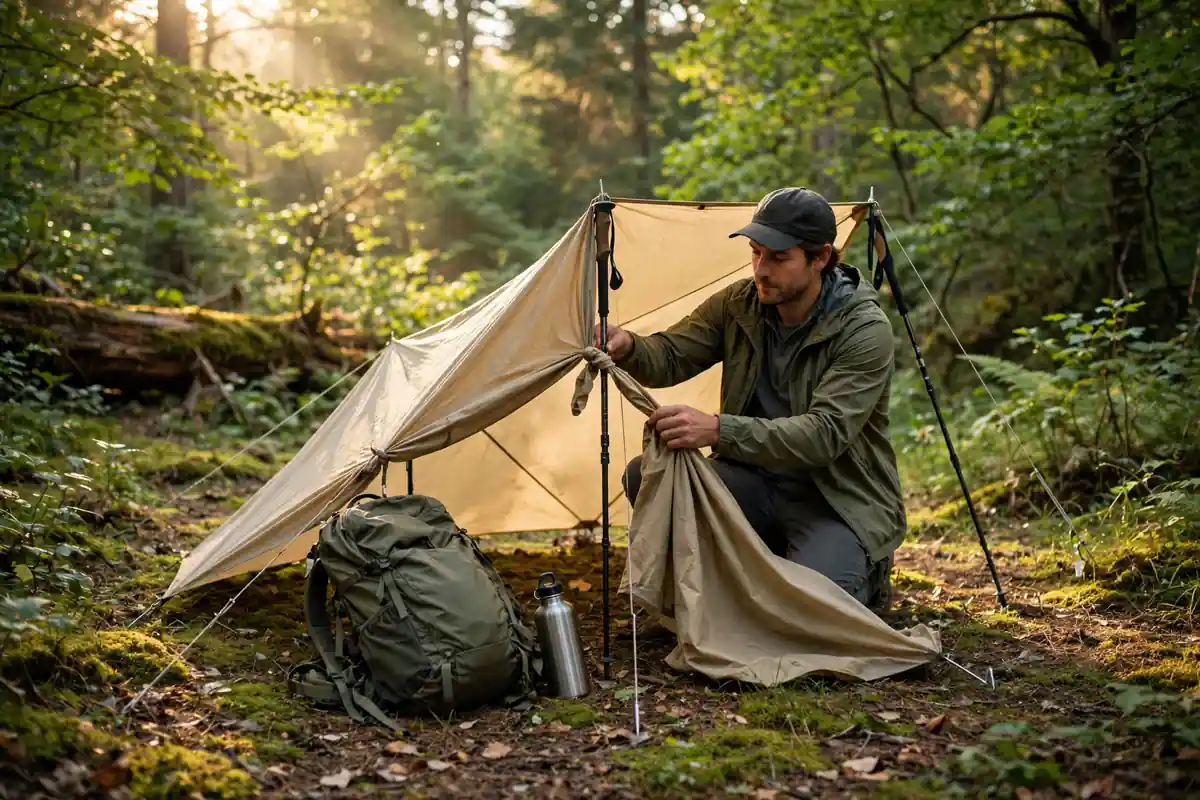
A hike goes wrong in ordinary ways: a trail missed in fading light, a twisted ankle two miles from the road, weather that turns faster than the forecast promised. Survival in those moments rarely looks like television. It looks like a calm person making a short list of priorities in the right order — protection from the weather first, water second, signaling always, and food a distant last. This guide covers the wilderness survival basics taught by rescue professionals: shelter, water, fire, food and signaling. It is general educational information, not a substitute for training, and one rule outranks everything in it: if you have any way to contact emergency services or local rescue, do that first. Call, text, or activate an emergency beacon before anything else — real help beats self-help every time.
The Priority Order That Saves Lives
Experienced rescuers teach a simple hierarchy, because the body’s deadlines are not equal:
- Immediate danger and first aid — stop bleeding, move away from hazards like floodwater or unstable slopes.
- Shelter and warmth — exposure to cold, wind and rain can become dangerous within hours, far faster than hunger.
- Water — dehydration degrades strength and judgment within a day, sooner in heat.
- Signaling — rescue is the goal; everything else buys time for it.
- Food — healthy people can function for many days without it. It is the lowest priority, however large it looms in your mind.
The other core rule: stop and stay put. Walking without a certain destination burns energy, spreads the search area, and is how small problems become tragedies. The mindset behind that rule — and what real search timelines teach about it — is explored in depth in our guide to how to survive being lost.
Shelter: Your First Real Job
Shelter means protection from wind, rain and ground cold, not a cabin. In order:
- Use what you have first. A waterproof jacket, a spare layer, an emergency blanket from your pack — put insulation between you and the weather immediately.
- Pick the right spot. High, dry ground out of wind; avoid dry creek beds (flash flood risk), lone tall trees in lightning, and the bottom of slopes where cold air pools.
- Insulate from the ground. You lose heat downward fast. A thick layer of dry leaves, pine boughs or your backpack under you matters more than a roof.
- Build small. A lean-to against a fallen log, covered with branches and leaf litter, traps more warmth than a large structure. Smaller space, warmer air.
Stay dry above all. Wet clothing in wind strips body heat dangerously fast, so shelter-building outranks almost everything when weather is turning.
Water: Find It, Then Make It Safe
Your body needs a steady supply, and thirst is a late warning. Safe standard guidance:
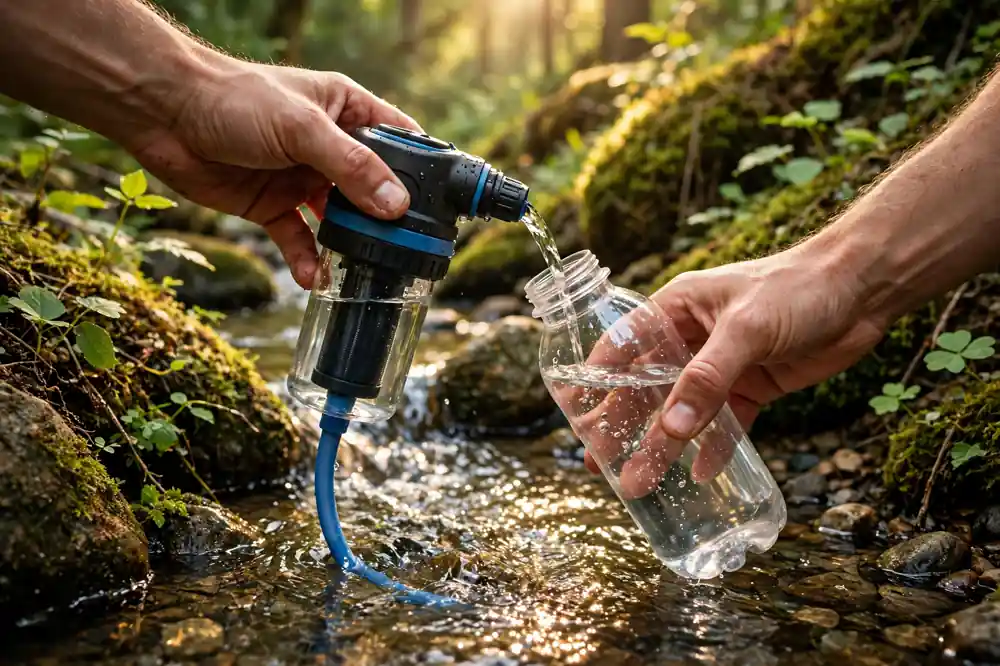
- Best sources: springs, fast-moving streams, and rainwater you collect directly. Still ponds and slow rivers carry more contamination risk.
- Purify whenever you can. Boiling is the classic reliable method — a rolling boil makes water far safer. A small commercial filter or purification tablets from your kit are lighter and faster.
- If you truly cannot purify, drink anyway rather than becoming dangerously dehydrated; rescuers are clear that dehydration is the more immediate threat, and treat any resulting illness later as the lesser problem.
- Ration sweat, not water. Rest in shade during heat, work in the cool hours, and breathe through your nose. Do not “save” water in your bottle while your body fails — drink when thirsty.
Avoid alcohol entirely, and do not eat snow in winter conditions — it costs core heat. Melt it first if you have any means.
Fire: Warmth, Signaling and Morale
A fire provides heat, a way to boil water, a cooking method, and a visible signal — but only build one if conditions allow it safely. Never light a fire in dry, windy conditions where it could spread, and never leave one unattended.
The reliable structure is simple: gather tinder (dry bark shavings, dead grass, cotton), kindling (pencil-thin dry sticks), and fuel (thicker wood) before striking a match, in quantities that feel excessive. Build a small teepee of kindling around the tinder, light the tinder, and add wood gradually. Everything must be as dry as you can find — search under dense tree cover and inside dead standing wood. Matches and a lighter carried in separate waterproof bags are the standard; fancy fire-starting tricks are a last resort, not a plan.
Signaling: Make Yourself Impossible to Miss
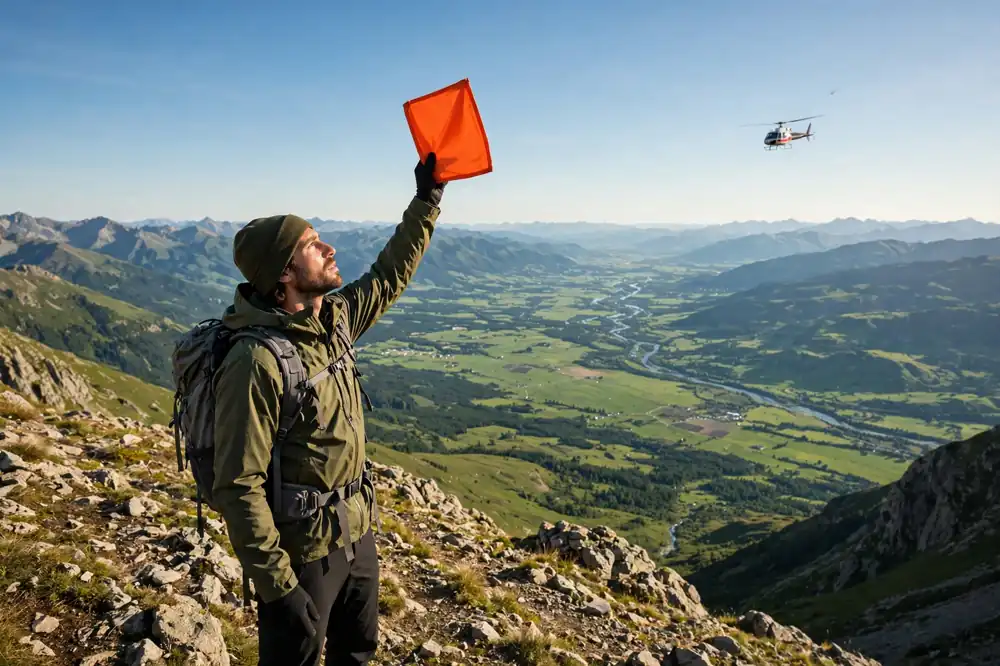
Most rescues end because the missing person was findable. While you still have energy, prepare signals:
- Sound carries farther than your voice and costs less energy: three whistle blasts, repeated, is the widely recognized distress pattern. A whistle is one of the cheapest, most valuable items in any pack.
- Sight: bright clothing or an emergency blanket laid out in a clearing, a signal mirror flashed at aircraft or distant trails, and a smoky fire (green vegetation over flames makes white smoke) during daylight.
- Ground signals: large arrows or an X made from branches, rocks or trampled shapes in open ground can be seen from the air.
- Light at night: a flashlight or phone light flashed in patterns toward sounds of aircraft or searchers.
Stay near your signals. A found shelter with nobody in it restarts the search instead of ending it.
Food: The Lowest Priority, Handled Calmly
Because food matters least in the short term, the safe guidance is conservative:
- Eat any real food you carried first — trail snacks, bars, anything in the pack.
- Do not eat plants, berries or mushrooms you cannot identify with complete certainty. Many toxic species resemble edible ones, and poisoning converts a stable situation into a medical emergency.
- Fishing and trapping burn significant energy for uncertain returns; that energy is usually better spent on shelter, water and signaling.
- Slow down. Resting conserves calories and water alike, and patience is what most short rescues reward — as the rescue timelines in our guide to ocean and mountain rescue show, teams work methodically and they do keep coming.
The Small Kit That Covers the Basics
You do not need expedition gear for ordinary hikes. Rescue professionals consistently recommend a compact kit:
- Whistle, flashlight or headlamp, and a fully charged phone (with offline maps downloaded)
- Waterproof jacket and one warm extra layer
- Water plus a small filter or purification tablets
- Emergency blanket, knife or multitool, lighter and matches in a waterproof bag
- Basic first aid supplies and any personal medication
- A note left with someone: where you went, your route, and when to raise the alarm if you do not return
That last item costs nothing and starts searches hours earlier, which is worth more than any gadget.
Frequently Asked Questions
What should I do first if I realize I am lost?
Stop, sit down, and contact emergency services if you have any signal or a satellite device. Then shelter in place, make yourself visible, and conserve energy. Most people are found close to where they stopped once they stopped moving.
How long can a person survive without water or food?
It depends heavily on heat, exertion and health, but water is the urgent limit — serious dehydration can develop within a day in hot conditions, while healthy people generally cope for many days without food. That is why survival priorities put water far above food.
Is it safe to drink from a stream in an emergency?
Purifying by boiling, filtering or tablets is always best. In a genuine emergency where the alternative is dangerous dehydration, rescue guidance is to drink — dehydration is the faster, more certain threat — and seek medical attention after rescue.
Why not walk out instead of waiting?
Because uninjured people who keep walking consistently make searches longer and larger. Unless you can see a certain, safe destination — a road, building or trail you are sure of — staying put near shelter and signals gives rescuers the smallest possible area to search.
The Bottom Line
Wilderness survival basics are unglamorous on purpose: stop, call for help if you possibly can, get out of the weather, find and treat water, prepare signals, and let food wait. The same preparedness mindset applies back home, as our guide to emergency preparedness at home shows.