
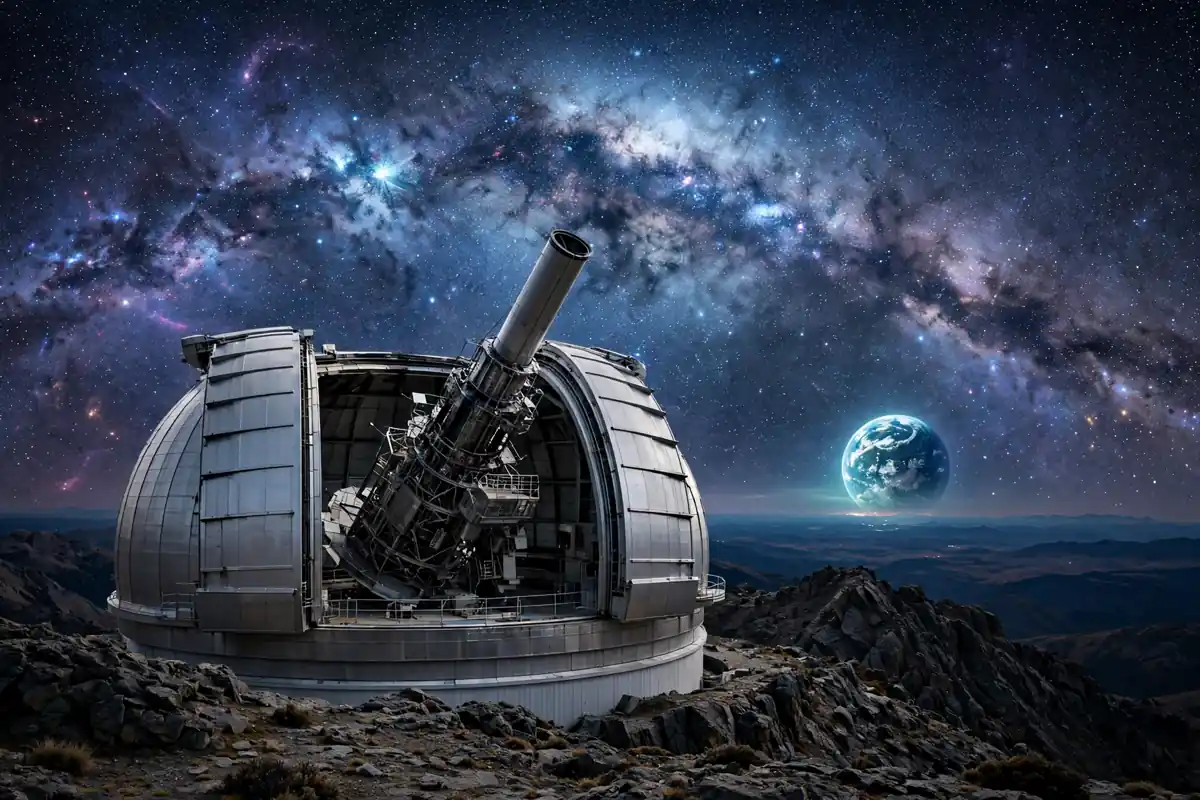
Are we alone? It is the oldest question science can ask, and for the first time in history it is being investigated with instruments that could plausibly answer it. The modern search for life beyond Earth runs on three tracks at once: telescopes analyzing the air of distant planets, spacecraft visiting the hidden oceans of our own solar system, and a disciplined set of rules for what would count as proof. This article explains all three — and why scientists are so careful with the word “discovery.” It pairs naturally with our overview of space mysteries explained, where the Fermi paradox asks why, in such a vast universe, we have found nothing yet.
Track One: Reading the Air of Other Worlds
The most powerful new technique in the search does not involve travel at all. When a planet crosses in front of its star, a tiny fraction of starlight filters through the planet’s atmosphere on its way to us. By spreading that light into a spectrum, astronomers can identify gases present in the air — because each gas absorbs light at characteristic wavelengths.
Scientists look for combinations that are hard to explain without biology:
- Oxygen or ozone together with methane — on Earth, this pairing is maintained by living processes and would otherwise react away
- Water vapor and carbon dioxide — context that a planet has an atmosphere and possibly liquid water conditions
- Unusual industrial gases — a speculative category sometimes called “technosignatures,” with no detections to date
The honest caveat: every atmospheric signal so far sits at the edge of detectability, and each candidate explanation must survive challenges from geology and chemistry, which can sometimes mimic biology. Claims in this field are routinely revised as better data arrives — that is the method working as intended, not failing.
Track Two: Oceans Inside Our Own Solar System
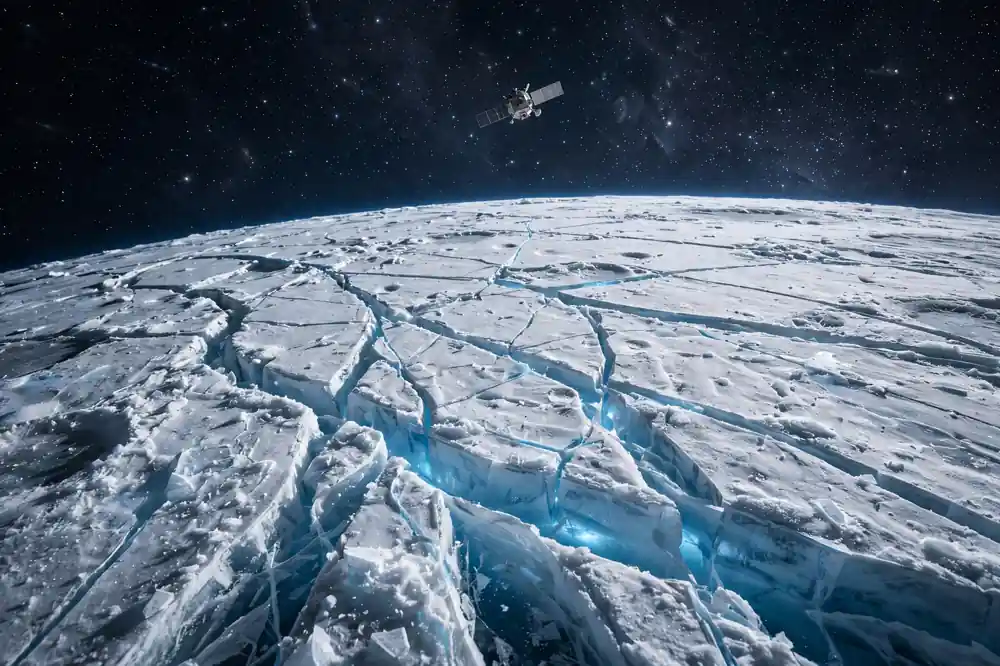
Some of the most promising habitats are not around other stars but in our own backyard, beneath the ice of outer moons:
- Europa (moon of Jupiter): evidence from multiple missions supports a global saltwater ocean beneath its icy crust, kept liquid by tidal flexing
- Enceladus (moon of Saturn): spacecraft flew directly through plumes of water erupting from its south pole and sampled material originating from a subsurface ocean — the only place we have literally tasted an alien ocean
- Titan (moon of Saturn): lakes of liquid methane and a thick atmosphere make it chemically fascinating, though any life there would operate on very different chemistry from Earth’s
Missions now flying or in development are designed to characterize these oceans: how deep, how salty, how chemically active. No mission has found life on any of them. What they have found is that the ingredients and conditions associated with life — liquid water, chemistry, energy — are surprisingly common.
Track Three: Mars, Meteorites and the Neighborhood
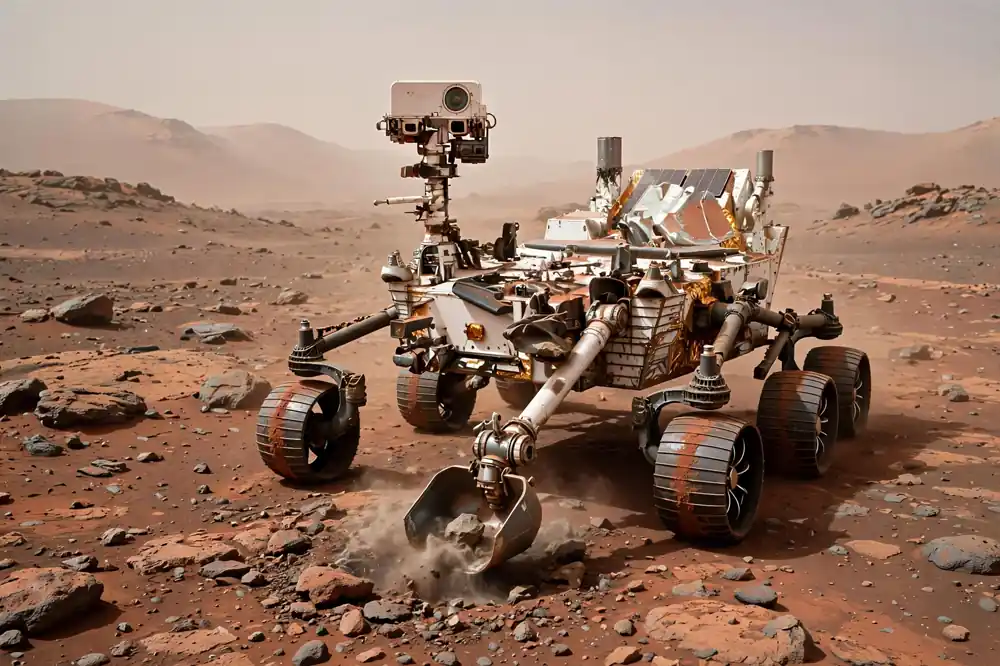
Mars remains the most intensively searched world. Rovers analyze rocks and soil chemistry, hunting for organic molecules and environments that were habitable billions of years ago. The distinction matters: finding that Mars could once have supported microbial life is very different from finding that it did. Organic molecules alone are not proof — they form through non-biological processes too, and appear even in meteorites that fall to Earth.
Standards of Evidence: What Would Proof Look Like?
Extraordinary claims need extraordinary evidence, and the field has effectively agreed on a ladder of confidence:
| Level of claim | Example | Status so far |
|---|---|---|
| Habitable conditions | Liquid water, energy, chemistry present | Confirmed in several places |
| Chemical hints (“biosignatures”) | Gas combinations biology could explain | Candidates only; all contested |
| Multiple independent lines of evidence | Same signal confirmed by different instruments and teams | Not yet achieved for life |
| Direct evidence | Fossil, organism, or unambiguous biological structure | Not found anywhere |
Several working rules protect the process:
- Repeatability: another team, ideally with a different instrument, must see the same thing.
- Rule out the non-living explanation first: geology, chemistry and instrument error get every chance to explain a signal before biology is invoked.
- Publish the uncertainty: a detection stated with its confidence level is science; the same detection stated as certainty is marketing.
History justifies the caution. Past announcements — from a famous meteorite study in the 1990s to a contested gas detection in the atmosphere of Venus in 2020 — drew global headlines and then weakened under scrutiny. The science improved each time, but the lesson stuck: in this field, “promising” and “proven” are separated by years of verification.
What About Intelligent Life?
The search for technosignatures — radio or optical signals, waste heat, industrial chemicals — continues with sensitive instruments scanning large numbers of stars. The result so far is a clean null: no confirmed artificial signal has ever been detected. That silence is itself data, feeding the Fermi paradox discussed in our space mysteries overview, but it is not proof that nobody is out there. We have searched a tiny fraction of the sky, for a short time, with limited methods.
Frequently Asked Questions
Have scientists found any evidence of life beyond Earth?
Not confirmed evidence. Scientists have confirmed places with habitable conditions — subsurface oceans, organic chemistry, exoplanets with atmospheres — and have reported candidate chemical hints that remain contested. No organism, fossil or unambiguous biosignature has been verified anywhere beyond Earth.
Which place is most likely to have life?
For simple microbial life, the subsurface oceans of Europa and Enceladus are leading candidates because they combine liquid water, chemistry and energy. For atmospheric biosignatures, nearby exoplanets will dominate the coming decades of telescope time.
What is a biosignature?
Any measurable feature — most often a gas or combination of gases in an atmosphere — that could be produced by life. The hard part is that most candidate biosignatures can also be produced without life, so context and repeat observation decide whether a claim survives.
If life is found, will it be announced immediately?
Discoveries are typically announced as preliminary findings with stated uncertainty, then tested by other teams over months or years. A claim of alien life would face the highest verification bar in science before being treated as established — expect a process, not a single headline.
The Bottom Line
The search for life beyond Earth has quietly become one of the best-equipped investigations in science: telescopes reading alien air, spacecraft tasting ocean plumes, and strict rules for what counts as proof. Nothing has been found yet — but for the first time, “yet” feels like a meaningful word.
1 thought on “The Search for Life Beyond Earth: Telescopes, Missions and Standards of Evidence”