
We remember famous speeches as strings of immortal sentences. But no great speech was delivered into a vacuum: each was aimed at a frightened, grieving or divided audience at a precise moment of crisis, and its words only make full sense when you know what had happened in the weeks before. This article puts six of history’s most quoted speeches back into their moments — what had just gone wrong, who was listening, and what the speaker needed those listeners to do next.
Elizabeth I at Tilbury (1588): A Speech We Know Second-Hand
In August 1588, with the Spanish Armada threatening invasion, Elizabeth I rode to the camp at Tilbury to address her troops. The famous line attributed to her — about having the heart and stomach of a king — comes to us through later accounts rather than a transcript made on the day, and historians debate the exact wording. What is not in doubt is the political theater: a queen with no army of her own standing before soldiers in armor, converting a perceived weakness into the speech’s whole argument. It is a standing lesson that for early speeches, we often inherit the legend of the text, polished by retelling — the same caution applies to the written messages in the letters that changed history.
Lincoln at Gettysburg (1863): Two Minutes After a Two-Hour Speech
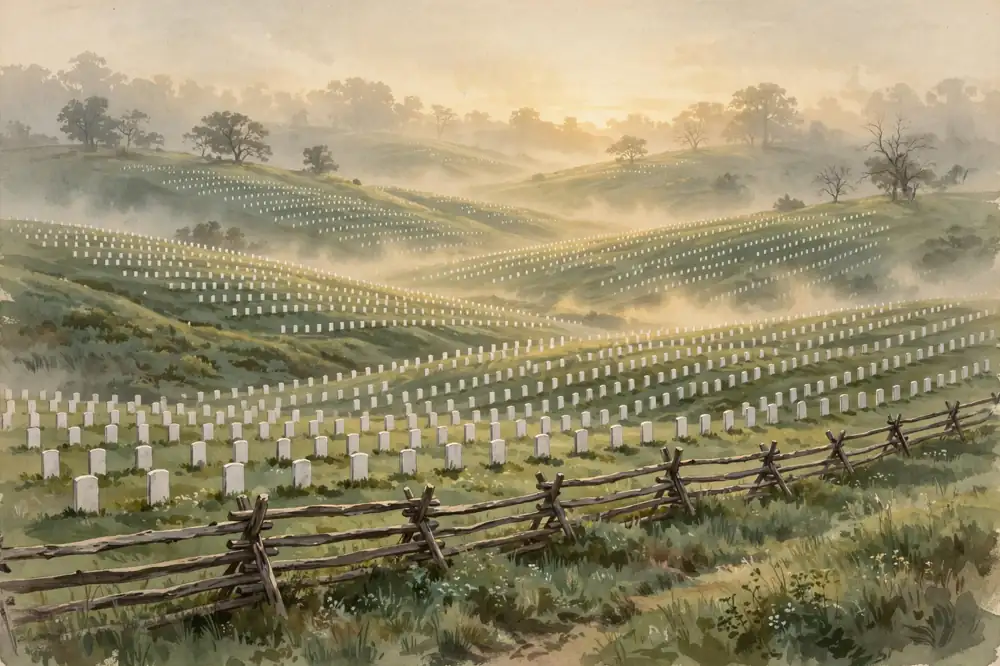
On November 19, 1863, some 15,000 people gathered to dedicate a cemetery on the Gettysburg battlefield, where thousands of soldiers had died the previous July. The featured orator, Edward Everett, spoke for about two hours, as custom expected. Then President Abraham Lincoln spoke roughly 270 words in about two minutes. His address did not dwell on the battle’s tactics; it reframed the Civil War itself as a test of whether a nation built on the proposition of equality could survive — and rededicated the living to finishing the work. Lincoln reportedly doubted the speech had landed; its brevity, unusual for the era, is exactly why it endured when the two-hour oration faded.
Churchill, 1940: Speaking to a Country Expecting Invasion
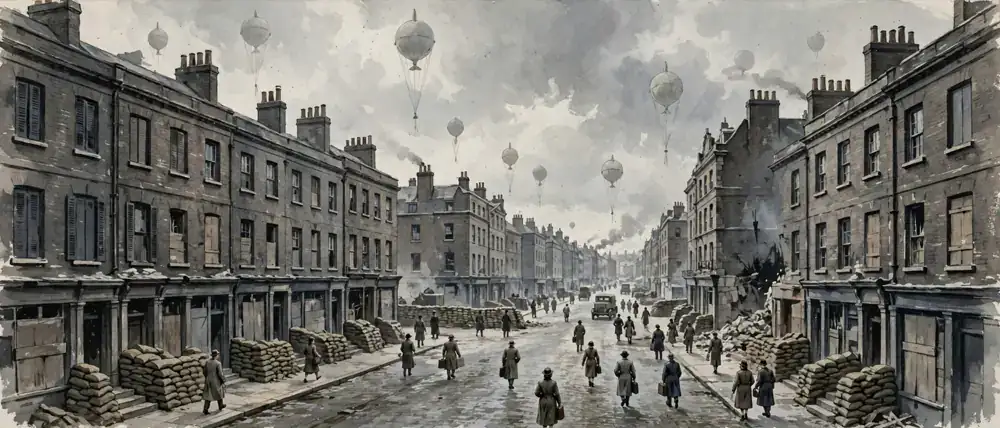
Winston Churchill became prime minister on May 10, 1940, the very day Germany invaded the Netherlands, Belgium and France. His first speech to the House of Commons, on May 13, offered the nation “blood, toil, tears and sweat” — no promises of easy victory, because there was none to offer. Three weeks later, after the British Army was evacuated from Dunkirk and France was collapsing, his June 4 speech vowing to fight on the beaches, landing grounds, fields and streets served a double purpose: stiffening British resolve at home and signaling to the United States that Britain would not negotiate. The context explains the speeches’ strange power: they are catalogs of disaster, delivered as if disaster were a reason to continue. The summer of 1940 is a centerpiece of the turning points in American and British history.
Roosevelt After Pearl Harbor (1941): One Sentence That Framed a War
On December 8, 1941, the day after Japan’s attack on Pearl Harbor killed more than 2,400 Americans, President Franklin D. Roosevelt addressed a joint session of Congress. His short speech is remembered for its opening description of December 7 as “a date which will live in infamy.” In about six minutes, Roosevelt listed the attacks across the Pacific and asked for a declaration of war — which Congress granted within the hour, with a single dissenting vote. The speech’s context is its economy: the facts were so stark that rhetoric could stay plain, and the one vivid phrase did all the emotional work.
Kennedy’s Inaugural (1961) and King’s Dream (1963)
John F. Kennedy took the oath on January 20, 1961, in a freezing Washington, at the height of the Cold War, as the first president born in the twentieth century. His inaugural address — famous for the appeal to ask not what your country can do for you — was aimed as much at Moscow and the decolonizing world as at Americans, announcing a generational changing of the guard. Two and a half years later, on August 28, 1963, Martin Luther King Jr. addressed the March on Washington from the Lincoln Memorial. The prepared text was strong; the immortal section came when King set his notes aside and, encouraged by gospel singer Mahalia Jackson calling out behind him, returned to a refrain he had used before: “I have a dream.” The context — a quarter of a million people, the Lincoln Memorial behind him, network television carrying it live — turned a sermon into a national scripture. Both speeches are anchors of the calendar in 50 dates everyone should know.
Mandela at Rivonia (1964): A Speech From the Dock
Some speeches are given with a rope in view. On trial for his life in apartheid South Africa in April 1964, Nelson Mandela spoke for hours from the dock in Pretoria, closing with the declaration that a democratic and free society was an ideal for which he was prepared to die. The speech did not save him from a life sentence — it was never meant to persuade that court — but it turned the defendant into the accuser, and it echoed through 27 years of imprisonment until his release in 1990. Context here is everything: the same words at a rally would be rhetoric; spoken facing a possible death sentence, they became testimony.
Frequently Asked Questions
What is the most famous speech of all time?
There is no definitive ranking, but the Gettysburg Address, Churchill’s 1940 speeches and “I Have a Dream” are the most common answers in the English-speaking world — all three unusually short, and all delivered at moments of national crisis.
Did leaders write their own speeches?
It varies. Lincoln wrote his own. Churchill wrote his own, rehearsing them aloud. Kennedy worked closely with adviser Ted Sorensen — the exact division of labor on his speeches is still debated by historians. King spoke from a prepared text at Washington but improvised the most famous passage.
Why are so many great speeches short?
Because crisis is clarifying. When the audience already knows the disaster, a speaker does not need to explain — only to interpret and direct. Brevity also aids memory: 270 words can be memorized, quoted and carved in stone.
The Short Version
Read the headline above each speech and you miss the point: the words worked because of the rubble, the casualty lists, the cold or the courtroom around them. Put the moment back, and a famous phrase stops being a poster quote — it becomes a decision, made out loud, in public, when it mattered most.