
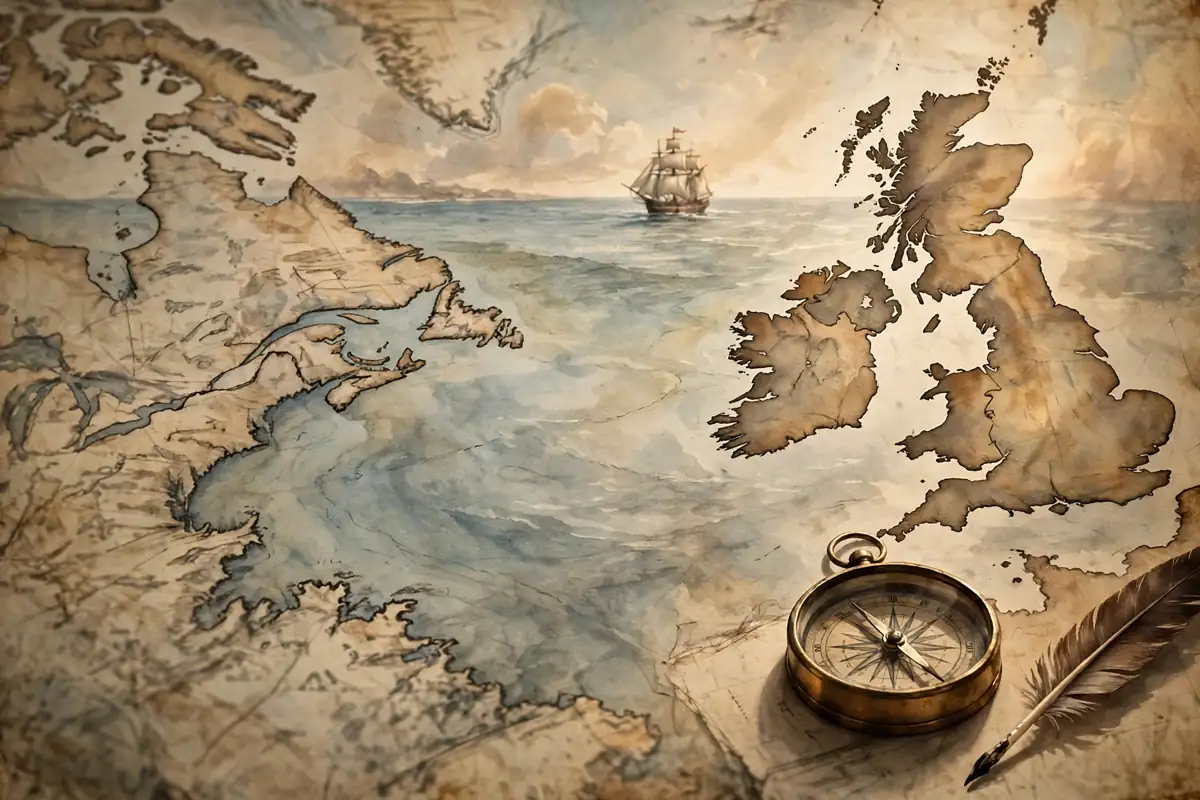
The United States and Britain share a language, a legal tradition and centuries of tangled history — first as colonies and crown, then as rivals, and finally as close allies. Their story is not a smooth line. It bends at a handful of turning points: battles, charters, rebellions and inventions that changed what both countries became. This guide walks through the biggest of those moments, the people who drove them, and the places where they happened, so you can see how two nations that once fought a war of independence ended up shaping the modern world side by side.
Two Countries, One Shared Story
For roughly 170 years, the American colonies were part of the British world. Settlers carried English law, customs and language across the Atlantic, while goods, taxes and orders flowed back the other way. That long colonial period is why American institutions — courts, legislatures, even the idea of rights against the government — have deep English roots. Understanding the turning points below means understanding that American history and British history were, for a long time, a single story told on two shores.
1066: The Norman Conquest Reshapes England
When William of Normandy defeated King Harold at the Battle of Hastings in 1066, England’s language, aristocracy and architecture changed almost overnight. Norman French poured into English vocabulary, castles rose across the countryside, and a strong central monarchy took shape. Without this conquest, the English that America later inherited would sound entirely different — and the strong crown that colonists eventually rebelled against might never have existed in the same form.
1215: Magna Carta Limits the King
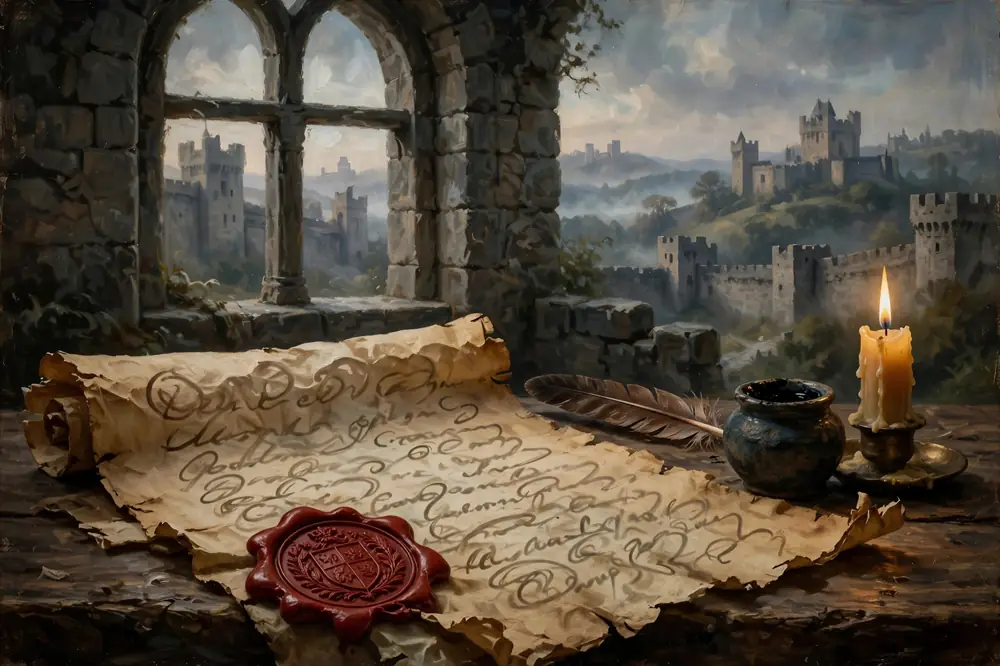
At Runnymede in June 1215, King John was forced to seal Magna Carta, the “Great Charter” demanded by his barons. It did not create modern democracy, and most of its clauses served the barons rather than ordinary people. But it established one explosive idea: the king is not above the law. Centuries later, American colonists cited that principle when they argued that Parliament and the king had violated their rights. To explore the dates that anchor stories like this one, see our guide to 50 dates everyone should know.
The Reformation and the Age of Exploration
In the 1530s, Henry VIII broke England’s church away from Rome, beginning the English Reformation. The religious split that followed — Protestant against Catholic — shaped everything from royal successions to why many settlers crossed the Atlantic: Pilgrims and Puritans left partly to worship in their own way. In the same era, English ships began challenging Spanish power at sea, and in 1588 England weathered the Spanish Armada, a turning point that opened the door to England’s own colonial ventures in North America.
Civil War, Revolution and a New Kind of Government
England’s own civil war in the 1640s ended with the execution of Charles I in 1649 — a shocking proof that a king could be tried by his subjects. A generation later, the Glorious Revolution of 1688 pushed James II from the throne, and the Bill of Rights of 1689 confirmed Parliament’s power over the crown. Across the Atlantic, colonists absorbed these lessons. When disputes over taxation without representation boiled over, the colonies declared independence on July 4, 1776. The war that followed — Lexington and Concord, Saratoga, and the Franco-American victory at Yorktown in 1781 — ended with Britain recognizing the United States in 1783. The US Constitution, signed in 1787, then built a republic on ideas about rights and limited government that had been argued about in Britain for centuries. For the words leaders used at moments like these, read famous speeches in context.
The Industrial Revolution Changes Daily Life
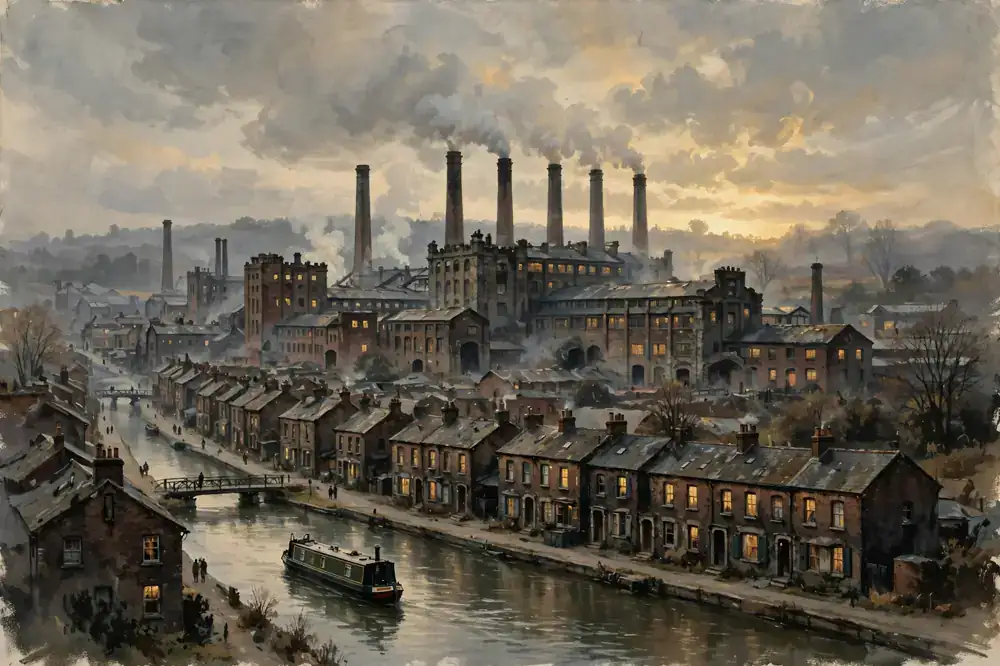
In the late 1700s and 1800s, Britain became the world’s first industrial nation. Steam engines, textile mills and railways transformed Manchester, Liverpool and dozens of other towns, while coal and iron remade the landscape. Millions left farms for factory towns, and working-class life changed utterly — a world we explore in depth in our look at everyday life in Victorian Britain. Industrial methods, machinery and capital soon crossed the Atlantic, fueling America’s own factories in New England and, later, its steel and railroad boom. Industrial power also expanded the British Empire — and with it, arguments about trade, labor and slavery that both countries had to confront. Britain abolished its slave trade in 1807 and slavery across most of its empire in the 1830s; the United States abolished slavery through the Thirteenth Amendment in 1865, after a devastating civil war.
From Rivals to Allies
Relations between the two countries were not always warm — they fought again in the War of 1812, and border disputes simmered for decades. But shared language, trade and eventually shared enemies drew them together. In both world wars they fought as allies: American troops and supplies reached Britain in 1917–18, and after Pearl Harbor in December 1941 the two nations formed the core of the Western alliance, planning campaigns together from Normandy in 1944 to the end of the war in 1945. Winston Churchill called the partnership a “special relationship,” a phrase still used today.
People and Places That Carry the Story
- Runnymede, England — where Magna Carta was sealed in 1215.
- Boston, Massachusetts — harbor protests and the spark of revolution.
- Yorktown, Virginia — where the decisive surrender of 1781 ended the Revolutionary War’s major fighting.
- Manchester, England — cotton mills and the factory age in full force.
- Elizabeth I, Oliver Cromwell, George Washington, Abraham Lincoln and Winston Churchill — leaders whose decisions bent the story at critical moments.
Frequently Asked Questions
What was the single biggest turning point in Anglo-American history?
Historians debate this, but two candidates dominate: Magna Carta in 1215, which planted the idea that rulers are bound by law, and American independence in 1776, which turned shared ideas into a new nation and eventually a new kind of ally.
When did Britain and America become allies instead of enemies?
The shift was gradual. Trade and diplomacy improved relations through the late 1800s, and the two countries fought on the same side in the First World War. The alliance was sealed in the Second World War and has endured, with ups and downs, ever since.
Why do the US and UK use similar legal systems?
Because American law grew out of English common law during the colonial period. Courts, juries and many legal concepts traveled with the settlers and were adapted — not replaced — after independence.
The Short Version
A conquest in 1066, a charter in 1215, a revolution in 1776, factories in the 1800s and a wartime alliance in the 1900s: follow those five bends in the road and you understand how Britain and America became what they are — two countries separated, as the old joke goes, by a common language and joined by a very uncommon history.
1 thought on “American and British History: The Turning Points, People and Places That Changed Both Countries”