
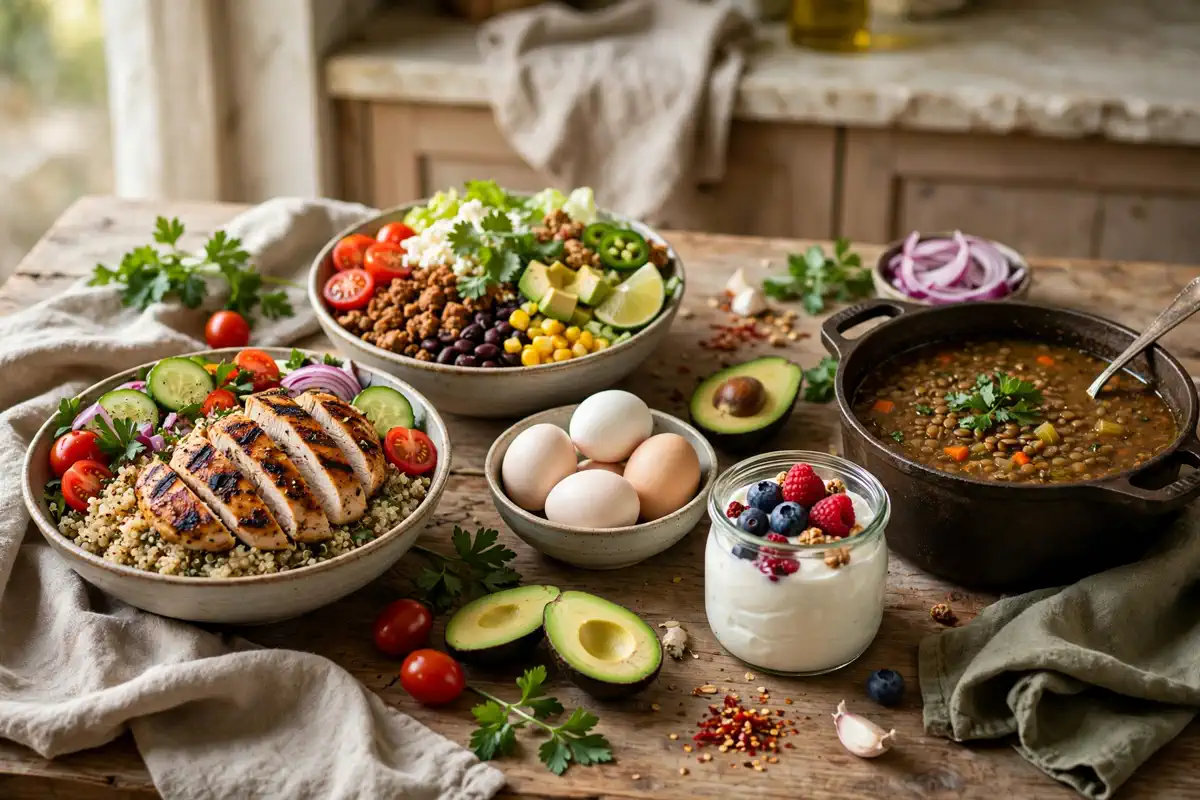
High-protein eating gets expensive and boring fast when it relies on chicken breast, protein bars, and shakes. This guide takes the smarter route: affordable protein sources used in rotation — eggs, Greek yogurt, ground turkey, chicken thighs, canned fish, beans, lentils, and tofu — prepped once into three complete recipes that hold up for days. You will find a simple portion framework, a cost-conscious source comparison, and exact storage times, so your prep is filling, varied, and safe. Everything here is general food information, not medical advice: if you have specific nutrition needs, a registered dietitian can personalize them.
Portions: A Simple, Flexible Framework
Rather than counting grams all day, build each meal around one palm-and-a-half portion of a protein food — roughly 4–6 oz (115–170 g) cooked meat or fish, 1–1½ cups of beans or lentils, or 3 eggs plus a yogurt — and fill the rest of the container with grains and vegetables. As a rough guide, common foods provide approximately:
- Chicken breast or thighs, 4 oz (115 g) cooked: about 30 g protein
- Ground turkey (93% lean), 4 oz (115 g) cooked: about 26 g protein
- Canned tuna, 1 can (5 oz / 140 g, drained): about 28–32 g protein
- Greek yogurt, plain nonfat, ¾ cup (170 g): about 15–17 g protein
- Eggs, 2 large: about 12 g protein
- Cooked lentils, 1 cup: about 18 g protein
- Extra-firm tofu, 5 oz (140 g): about 14–16 g protein
- Cottage cheese, ½ cup: about 12–14 g protein
Two protein-anchored meals plus a protein-rich snack (yogurt, cottage cheese, or eggs) comfortably covers most adults’ daily needs within a normal varied diet.
The Affordable Sources, Ranked by Practicality
Cheapest per gram of protein: eggs, dried lentils and beans, milk, and Greek yogurt bought in large tubs. Best convenience: canned tuna and salmon pouches, rotisserie chicken, cottage cheese. Best for batch cooking: chicken thighs (juicier than breast after reheating), ground turkey, and firm tofu, which absorbs whatever sauce the batch is wearing. Frozen fish and frozen edamame deserve a mention too — they wait patiently in the freezer for the week your fresh plans collapse, and buying them is one of the easiest ways to cut the grocery bill in the grocery budget guide sense: no spoilage, no waste.
Recipe 1: Turkey Taco Bowls
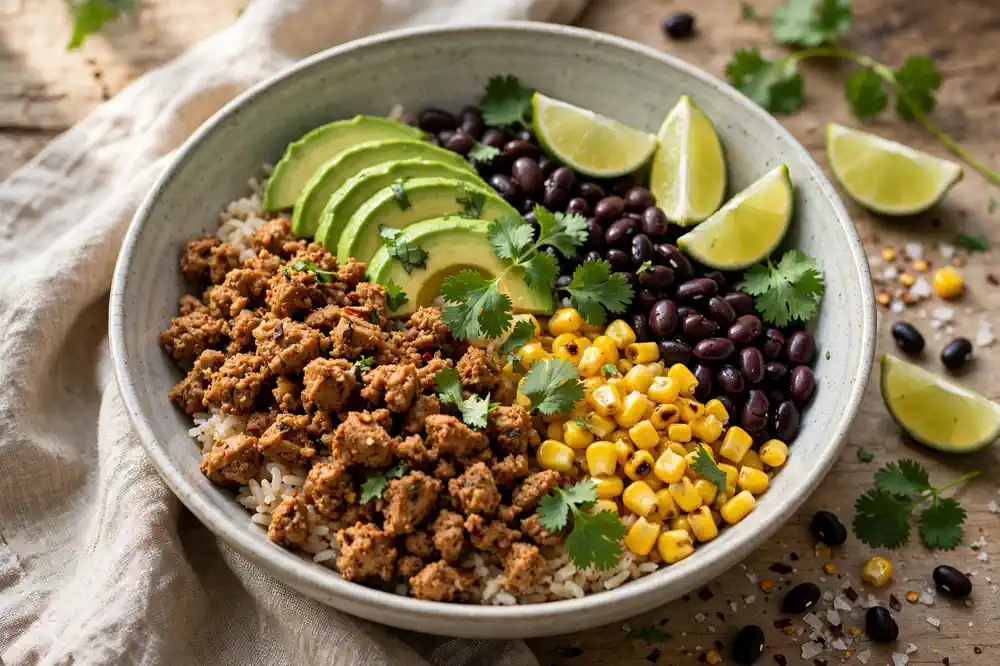
Makes 4 bowls · Prep 10 minutes · Cook 20 minutes
Ingredients
- 1½ lb (680 g) ground turkey
- 1 tbsp olive oil, 2 tsp chili powder, 1 tsp cumin, 1 tsp smoked paprika, ½ tsp garlic powder, salt
- 2 cups cooked rice or quinoa (from ⅔ cup dry quinoa or 1 cup dry rice)
- 1 can (15 oz / 425 g) black beans, drained and rinsed
- 1 cup corn, fresh or frozen; 1 cup diced tomatoes; shredded cabbage or romaine
- Topping: ½ cup Greek yogurt mixed with lime juice and a pinch of salt (a lighter stand-in for sour cream)
Steps
- Brown the turkey in the oil over medium-high heat for 7–8 minutes, breaking it up, until it reaches 165°F (74°C). Stir in the spices with 2 tablespoons of water and cook 1 minute more.
- Warm the beans and corn in a small pan or in the microwave until steaming.
- Divide rice among 4 containers, then turkey, beans, corn, and tomatoes. Pack cabbage and yogurt sauce separately to add fresh at serving.
- Refrigerate promptly. Eat within 3–4 days; the turkey-and-rice base (without fresh toppings) freezes well for up to 2–3 months.
Recipe 2: Lemon-Herb Chicken and Quinoa Bowls
Makes 4 bowls · Prep 10 minutes · Cook 25 minutes
Ingredients
- 1½ lb (680 g) boneless, skinless chicken thighs
- 1 tbsp olive oil, 1 tsp dried oregano, 1 tsp garlic powder, zest and juice of 1 lemon, salt and pepper
- 1 cup dry quinoa, rinsed (about 3 cups cooked)
- 2 cups broccoli florets and 1 sliced red onion, roasted or steamed
- Optional crumble: ½ cup feta
Steps
- Roast the chicken at 425°F (220°C) for 22–26 minutes until it reaches 165°F (74°C). Rest 5 minutes, then slice and toss with the lemon juice and zest.
- Cook the quinoa in 1¾ cups water: simmer covered for 15 minutes, rest off the heat for 5, then fluff.
- Roast the vegetables on a second pan while the chicken cooks, 18–20 minutes, or steam them if you prefer them bright.
- Assemble bowls with quinoa, chicken, and vegetables; add feta at serving. Keeps 3–4 days refrigerated.
Recipe 3: Smoky Lentil and Vegetable Soup

Makes 6 generous servings · Prep 10 minutes · Cook 35 minutes
Ingredients
- 1½ cups dry red or brown lentils, rinsed
- 1 onion, 2 carrots, and 2 celery stalks, diced; 3 garlic cloves, minced
- 1 tbsp olive oil, 1 tsp smoked paprika, 1 tsp cumin, 1 bay leaf
- 1 can (14 oz / 400 g) diced tomatoes; 6 cups vegetable or chicken broth
- 2 cups chopped spinach or kale; lemon wedges to serve
Steps
- Soften the onion, carrots, and celery in the oil for 5–6 minutes. Add garlic and spices for 30 seconds.
- Add lentils, tomatoes, broth, and bay leaf. Simmer gently for 25–30 minutes, until the lentils are tender (red lentils will partly dissolve and thicken the soup — that is desirable).
- Stir in the greens until wilted, season with salt, pepper, and lemon. This soup is the batch-cooking champion: it keeps 4 days in the fridge and up to 3 months in the freezer, and the flavor improves on day two.
Storage Times for Prepped Proteins (At a Glance)
- Cooked poultry, ground meats, and meat dishes: 3–4 days in the fridge at 40°F (4°C) or below; freeze for 2–3 months for best quality.
- Cooked fish: 3–4 days refrigerated; fatty fish freezes well for 2–3 months.
- Hard-boiled eggs (peeled): use within a few days; unpeeled, up to 1 week refrigerated.
- Cooked grains and lentil dishes: 4–6 days refrigerated for plain grains; soups 3–4 days; both freeze well.
- Greek yogurt and cottage cheese: follow the package date, and use opened tubs within about 5–7 days.
The complete chart, including raw meat storage and thawing rules, lives in the kitchen storage and food safety guide. If you are new to prepping in general, start with the gentler meal prep system for beginners and then shift your portions toward this guide’s framework. Breakfast is covered by the make-ahead breakfast ideas, which use eggs and yogurt in exactly the same spirit.
Reheating Without Ruining Texture
Microwave prepped bowls covered with a sprinkle of water over grains, in 1-minute bursts, stirring between, until steaming hot throughout (165°F / 74°C). Chicken thighs forgive reheating; chicken breast stays juicier if sliced cold over salads or warmed gently at reduced power. Crispy components like cabbage, nuts, and fresh herbs always go on after reheating.
Frequently Asked Questions
Is it cheaper to prep protein at home than to buy meal kits or ready meals?
Almost always, yes. A meal kit can be a useful convenience, but the same turkey, grains, and vegetables bought as raw ingredients typically cost well under half as much per serving, and this guide’s rotation uses those ingredients across three different dishes so nothing is wasted.
Can I hit high protein targets without meat?
Yes. Combine lentils or beans with grains, add tofu or edamame, and use Greek yogurt, cottage cheese, and eggs if you eat dairy and eggs. The lentil soup plus a yogurt-based snack day is a practical template.
How do I stop prepped chicken from tasting dry by day three?
Choose thighs instead of breast, slice after resting (not before cooking), store the chicken in its cooking juices or with the sauce in the container, and reheat gently rather than blasting it.
Is it safe to eat the same prepped meal on day four?
Yes, if it was refrigerated promptly at 40°F (4°C) or below and reheated until steaming hot. Day five is where caution wins: when in doubt, throw it out, and freeze portions on prep day for anything scheduled later in the week.
The Takeaway
Rotate affordable proteins, anchor each container with one clear protein portion, and let the freezer extend your week. That is high-protein meal prep that survives real schedules and real budgets.
1 thought on “High-Protein Meal Prep: Affordable Recipes, Portions and Storage Times”