
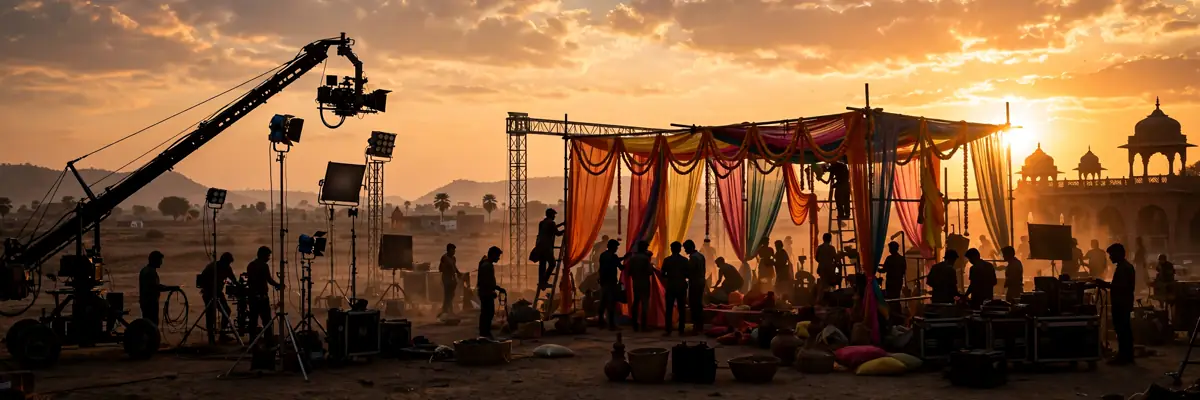
“Indian cinema” and “Bollywood” are used as synonyms around the world — and that is the first thing to unlearn. Bollywood is one industry, producing Hindi-language films from Mumbai. Indian cinema as a whole is something much bigger: a family of major language industries, each with its own stars, styles and audiences, together producing more films per year than any other country. This guide maps the industries, the languages and the genres, and explains how Indian blockbusters now travel far beyond India. For a closer look at the biggest names and regions, continue with our companion piece on Bollywood and regional Indian cinema.
Not One Industry, Many
India’s film map follows its languages. Each major industry has an informal name, a home city and a distinct flavor:
| Industry | Language | Base | Known for |
|---|---|---|---|
| Bollywood | Hindi | Mumbai | India’s most internationally recognized industry; big stars, music-driven storytelling |
| Tollywood | Telugu | Hyderabad | Large-scale action and spectacle; home of the “pan-India” blockbuster wave |
| Kollywood | Tamil | Chennai | Strong director-driven cinema; technically ambitious productions |
| Mollywood | Malayalam | Kerala | Critically praised, realistic, character-focused filmmaking |
| Sandalwood | Kannada | Bengaluru | A fast-growing industry with recent nationwide hits |
| Bengali cinema | Bengali | Kolkata | One of India’s oldest film traditions, famed for art-house classics |
Beyond these sit further industries in Punjabi, Marathi, Gujarati, Assamese and other languages. Historically, the southern industries together have often out-earned Hindi cinema in strong years, and their biggest stars command fan cultures of an intensity rarely seen elsewhere — including temple-like devotion, enormous opening-day celebrations and milk poured over giant star cutouts, a ritual of fan celebration in parts of the south.
The Language Question
A film’s language shapes everything: its dialogue rhythms, its comedy, its music and its market. For decades, a hit in one language was simply remade in others — sometimes the same story succeeding in three or four versions. The modern shift is the pan-India film: a production designed from the start to release simultaneously in five or more languages, with dubbed versions treated as first-class releases rather than afterthoughts. This strategy, proven by a run of enormous southern blockbusters in recent years, has permanently changed how big Indian films are planned, cast and marketed.
Dubbing quality matters enormously. A careless dub kills comedy and emotion; a well-cast dub lets a film feel native in every market. Studios now invest accordingly, sometimes hiring well-known voice actors for lead roles.
Signature Genres and Storytelling Habits
Certain patterns recur across Indian industries and set them apart from Hollywood norms:
- The masala film: a deliberate blend — action, romance, comedy, drama and music in a single film. Where Hollywood sorts these into separate products, the masala format promises a whole evening’s emotions in one ticket.
- Music as structure: songs are not decoration but load-bearing storytelling — marking love, celebration, grief and time passing. A hit soundtrack also markets the film for months before release.
- Interval storytelling: many Indian films are built around a mid-film intermission, so the story is engineered with a major twist or climax just before the break and a bigger one at the end.
- Star vehicles: scripts are frequently shaped around a star’s established screen persona, with entrance scenes designed as crowd events in themselves.
- Family and emotion at the center: even large action films typically anchor spectacle to family stakes and emotional confrontations.
How Blockbusters Travel the World
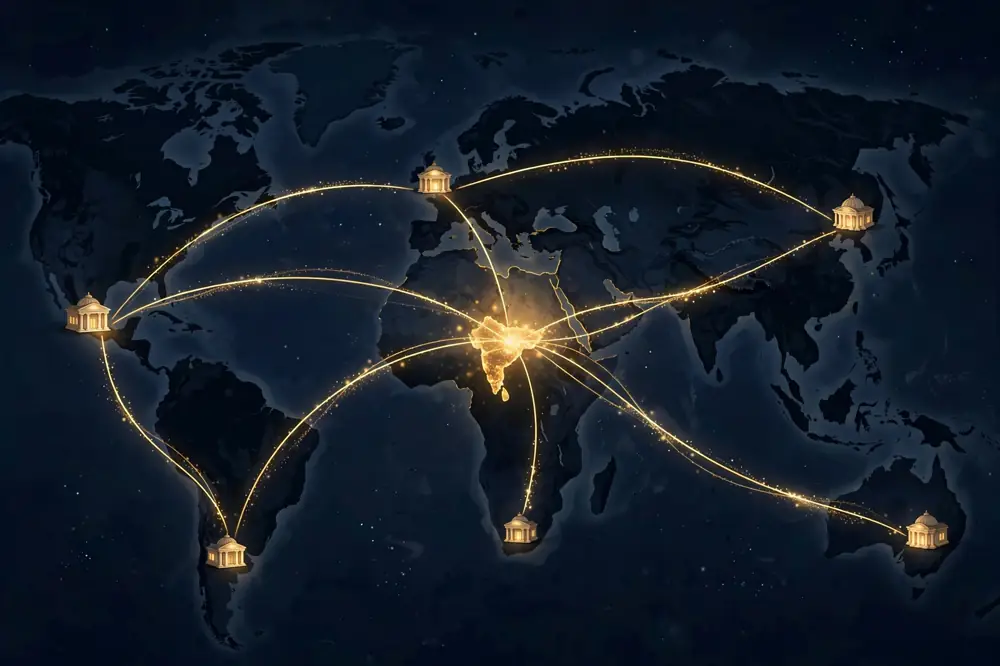
Indian films have always traveled with the Indian diaspora — audiences in the Gulf states, North America, the UK, Southeast Asia and East Africa sustained overseas releases for generations. Three modern forces widened that map considerably:
Streaming
Global platforms put Indian films in front of viewers who had never had easy access to them, with subtitles doing the quiet work. A thriller from Kerala or a Telugu action epic can now trend in countries with no theatrical release at all. The economics of this are the same machinery we explain in how movie streaming services make money — worldwide licensing turns regional hits into global catalog value.
Social clips and music virality
Short clips and song hooks cross language barriers faster than dialogue does. A dance step, a comic reaction or a striking visual can travel worldwide in days, pulling new audiences toward films they would never have searched for.
Event releases abroad
The biggest titles now open day-and-date in dozens of countries, with premiere-style screenings and fan events in major diaspora cities — and increasingly beyond them, as distributors test how far the audience extends.
Why the Center of Gravity Is Shifting
For most of a century, Hindi cinema defined India’s film image abroad. The recent era looks different: several of India’s highest-grossing and most internationally discussed films have come from the Telugu, Kannada and Tamil industries, sold on scale, visual ambition and stories rooted in local soil but structured for any audience. Filmmakers across industries now routinely collaborate, share technicians and plan multi-language releases from day one. The result is less a single “Indian cinema” than a federation — competitive at home, increasingly unified abroad.
Frequently Asked Questions
Is Bollywood the same as Indian cinema?
No. Bollywood is the Hindi-language industry based in Mumbai — the most famous part of Indian cinema, but only one part. Telugu, Tamil, Malayalam, Kannada, Bengali and other language industries are major cinemas in their own right.
What does “pan-India film” mean?
A film designed to release across India in multiple languages at once, usually with major stars and large-scale production values, rather than succeeding in one language first and being remade later.
Why do Indian films have so many songs?
Music is a core storytelling and marketing tradition in Indian cinema: songs carry emotion, mark turning points and often become popular months before the film releases, building its audience. It is a structural feature of the format, not an interruption of it.
Which Indian industry makes the most money?
It varies by year. Hindi cinema has the largest single-language domestic market, but in several recent years the southern industries combined — and sometimes individually — have matched or exceeded it, especially when a pan-India blockbuster lands.
The Bottom Line
Indian cinema is best understood as many cinemas sharing one passport: distinct languages, styles and star cultures that increasingly plan, release and travel together. Once you stop looking for a single “Bollywood” formula, the variety — art-house realism beside maximal spectacle, often in the same year — becomes the real story.