
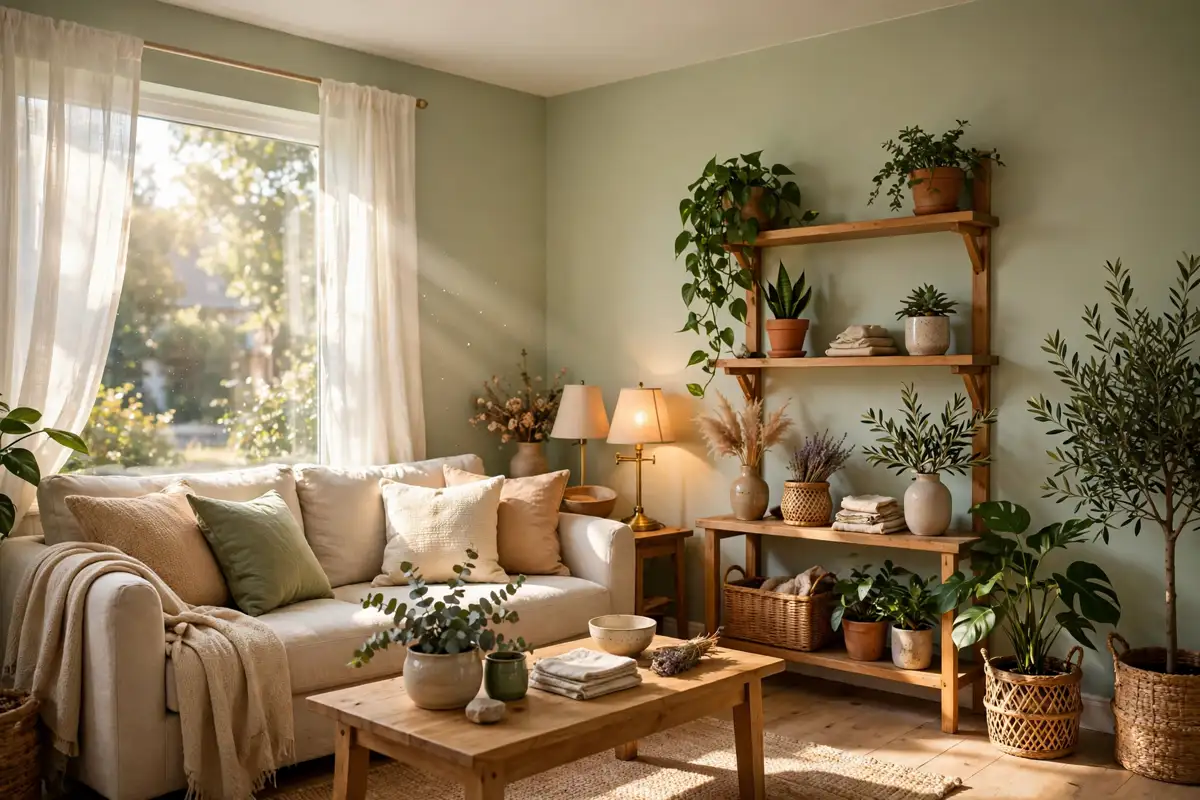
A room doesn’t need a renovation to feel brand new. The makeovers with the biggest impact usually come from four levers — paint, lighting, storage, and layout — and most of them cost a fraction of a full remodel. The trick is knowing which changes your eye actually notices. We forgive dated furniture surprisingly easily; what makes a room feel tired is dingy walls, flat lighting, visible clutter, and a layout that fights how you live. Fix those four things and almost any room reads as “done,” even if every piece of furniture stays the same.
Work through the ideas below room by room, starting with whichever lever your space needs most.
Paint: the cheapest transformation there is
Nothing changes a room’s mood faster per dollar than paint, because walls are the largest surface your eye takes in.
- One strong wall beats four timid ones. A deep green, warm terracotta, or inky blue on a single wall gives a room a focal point; the other walls can stay a soft neutral.
- Paint more than walls. Painting interior doors, built-in shelves, or a dated fireplace surround in the same color as the walls creates a calm, custom look. Painting the ceiling a soft tint of the wall color can make low rooms feel intentional instead of cramped.
- Use sheen strategically. Flat or matte paint hides imperfect walls; satin or semi-gloss on trim, doors, and kitchen cabinets stands up to scuffs and cleans easily.
- Test properly. Paint two large swatches on different walls and live with them for a day. Colors shift dramatically between morning and evening light.
- Don’t skip the small upgrades. Fresh caulk lines, filled nail holes, and clean, bright trim make even an unchanged wall color look freshly done.
If your makeover list grows into repairs — a sticking door, a dripping tap, tired grout — the beginner projects in our DIY home repairs guide are the safe place to start.
Lighting: layer it like designers do
Most rooms rely on a single ceiling light, which is why they feel flat. Designers layer three types:
Ambient lighting
The general glow — ceiling fixtures, recessed lights, or a large pendant. Choose a fixture sized for the room; an undersized light fitting is one of the most common reasons a room feels unfinished.
Task lighting
Light where things happen: under-cabinet strips in the kitchen, a reading lamp by the chair, a mirror light in the bathroom. Task lighting is both practical and the fastest way to make a room feel considered.
Accent lighting
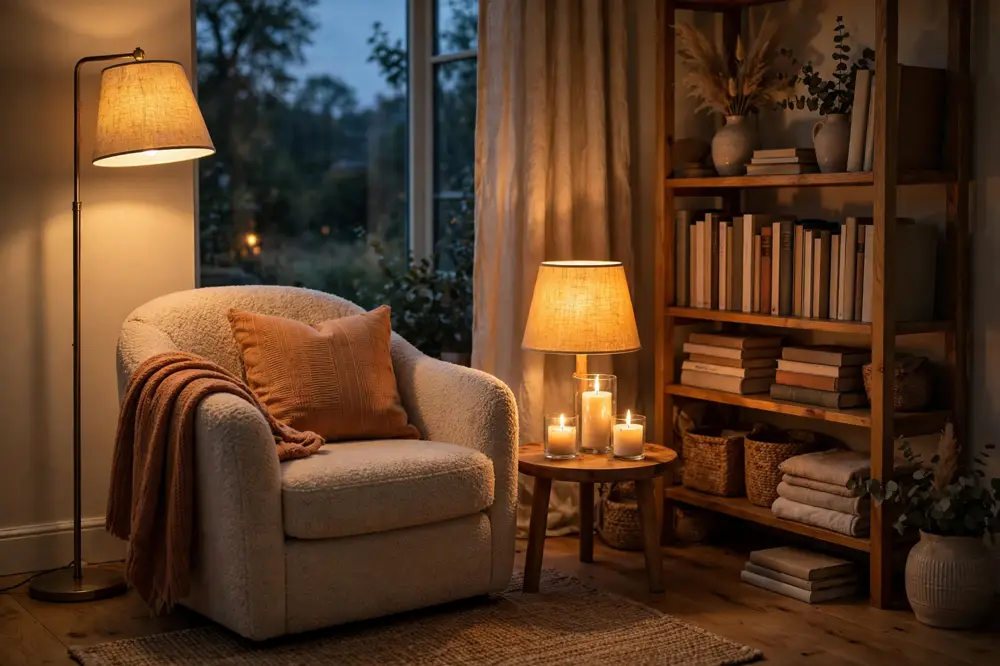
Picture lights, small table lamps, LED strips behind shelves or a TV. Accent light creates depth and makes evenings feel warm instead of stark.
Two rules tie it together: put lamps on dimmers or use warm-white bulbs consistently (mixed color temperatures make a room feel chaotic), and aim for at least two light sources in every room besides the ceiling light. Swapping builder-grade fixtures for one statement pendant over a dining table or entryway is a half-day job with an outsized payoff.
Storage: hide the visual noise
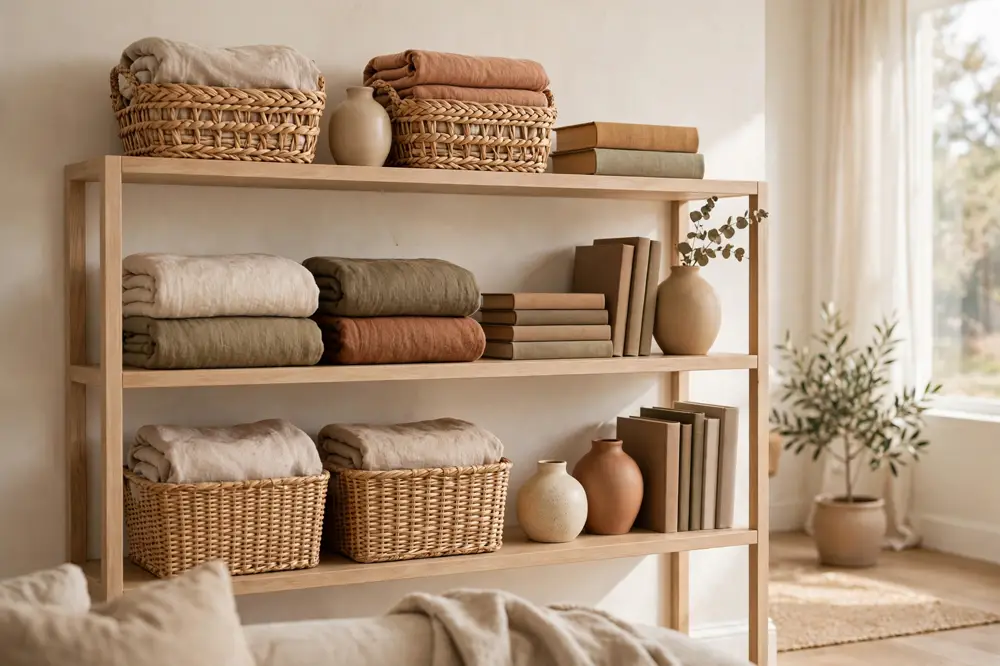
Clutter is the number one reason a tidy room still looks messy. The goal isn’t more storage furniture — it’s the right storage in the dead zones:
- Go vertical. Tall, narrow bookcases and wall-mounted shelves use the space above eye level that most rooms waste.
- Use the gaps. The area behind doors, under beds, above kitchen cabinets, and inside the dead corner of a closet can hold out-of-season and rarely used items in labeled boxes.
- Closed beats open. Open shelves look great in photos and dusty in real life. Mix a few styled open shelves with mostly closed cabinets, baskets, and lidded boxes.
- One-in, one-out zones. Give entryways a defined drop zone — hooks, a tray, a small bench with storage — so clutter lands somewhere designed instead of spreading.
- Furniture that works twice. Ottoman storage, a bench with a lift-up seat, and a coffee table with a shelf below quietly double your capacity.
Planning bigger changes alongside the pretty ones? If a makeover crosses into built-ins, plumbing moves, or structural tweaks, check our guide to home insurance and renovation before you start, so your cover still matches the finished home.
Layout: the free makeover
Rearranging furniture costs nothing and can change how a room works overnight. A few principles help:
- Float the furniture. Pulling a sofa a few inches off the wall and anchoring it on a rug makes living rooms feel larger and more deliberate, not smaller.
- Create one clear focal point. Arrange seating toward the fireplace, window, or media wall — whichever the room offers — rather than lining everything against the walls.
- Protect the walkways. Leave roughly a comfortable arm’s width of clear path through the room. If you have to turn sideways past a chair, the layout is fighting you.
- Right-size the rug. Front legs of sofas and chairs should sit on the rug. A too-small rug makes even expensive furniture look lost.
- Swap rooms, not furniture. The armchair nobody uses in the bedroom might be perfect in the living room corner; the bench at the foot of the bed might solve the entryway.
Finishing touches that pull it together
Once the big four are done, small consistent details finish the job: matching or deliberately mixed picture frames hung at eye level, curtains hung high and wide to fake taller windows, plants to soften hard corners, and one repeated accent color — in a cushion, a throw, and one piece of art — to make separate purchases look like a plan. Refreshing door handles, outlet covers, and switch plates to one finish is another quiet upgrade guests notice without knowing why.
A one-weekend makeover plan
- Friday evening: clear surfaces, sort clutter into keep / relocate / donate
- Saturday morning: paint the feature wall or the worst wall in the room
- Saturday afternoon: swap the main light fixture and add one lamp
- Sunday morning: add storage boxes, hooks, and the entryway drop zone
- Sunday afternoon: rearrange the layout, hang curtains high, style shelves
Frequently Asked Questions
What is the cheapest way to make a room look new?
Paint. A single feature wall or a fresh coat on walls and trim changes the largest visible surface in the room for the cost of a few gallons of paint, and it makes every other item in the room look better.
How can I make a small room feel bigger without renovating?
Use light, consistent colors, hang curtains high and wide, choose furniture with visible legs, add a large mirror opposite a window, and keep walkways clear. Layered lighting at different heights also makes small rooms feel deeper.
Which lighting upgrade makes the biggest difference?
Adding a second and third light source. A floor or table lamp with warm-white light, plus task lighting where you read or cook, removes the flat, shadowy look of a single ceiling light far more than one expensive fixture alone.
How do I reduce clutter without buying more furniture?
Use dead zones first: behind doors, under beds, above cabinets, and vertical wall space. Lidded boxes and baskets inside existing furniture hide visual noise, and a defined drop zone at the entry stops clutter spreading through the home.
Small changes, finished-room feeling
You don’t need a contractor to love your rooms again. Paint the biggest surface, layer the light, give clutter a hidden home, and arrange furniture for how you actually live. Do one room at a time, and each finished space will fund your motivation for the next.
1 thought on “Small Home Makeovers With Big Impact: Paint, Lighting, Storage and Layout Ideas”