
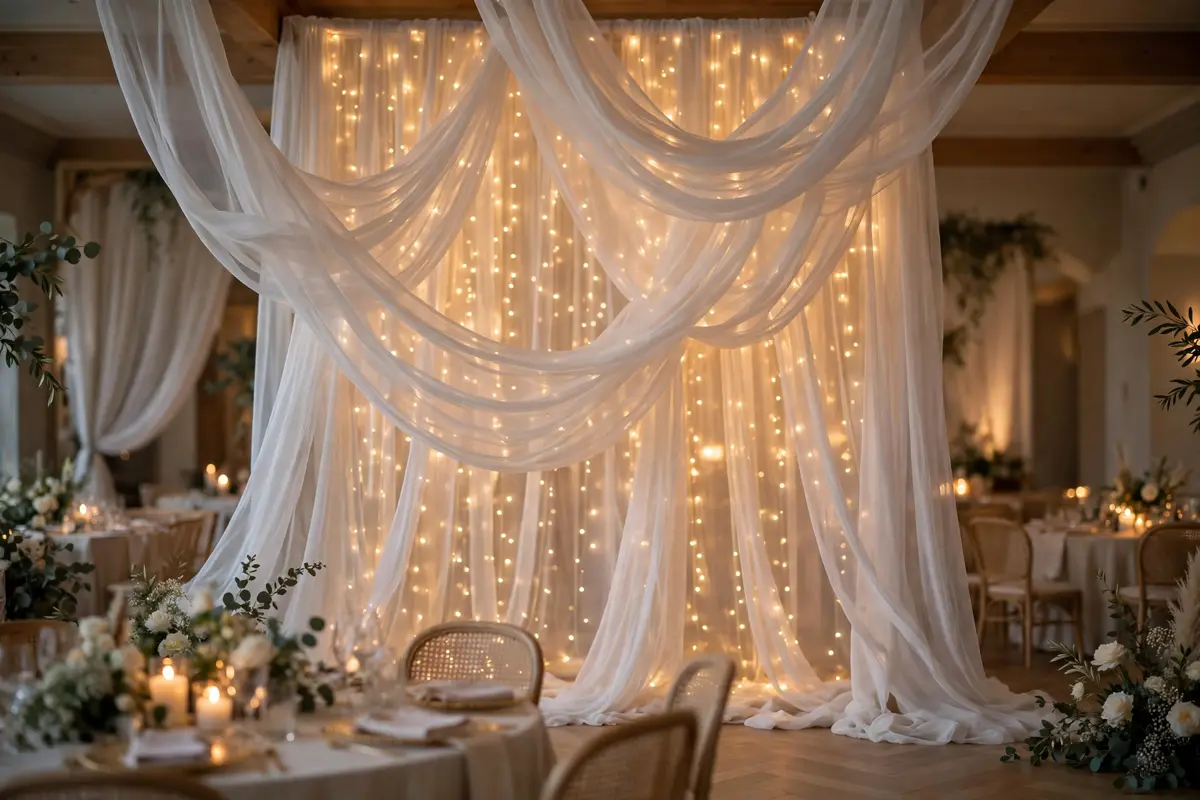
A drapery backdrop is the single most-saved wedding idea on Pinterest right now — searches for drapery backdrops are up more than 1,500% year on year, and the “Drapery Backdrop on a Budget” pin is one of the most-viewed pins on our own account. It is easy to see why. A few metres of fabric turn a plain wall, a bare arch or an ugly conference room into a ceremony space that looks like it cost thousands. The secret is that it does not have to. Done the smart way, a beautiful backdrop costs under $100, takes an afternoon to build, and photographs like a professional installation.
Why drapery works so well
Fabric does three things no other decoration does at the same price. It softens hard architecture — bare walls, metal beams, low ceilings — and makes a room feel finished. It creates a focal point, telling the camera and the guests exactly where to look: the couple, the cake, the top table. And it catches light. Sheer fabric with fairy lights behind it glows; velvet drinks in candlelight and looks rich even in a dark hall. A backdrop is also forgiving: unlike flowers, it does not wilt, and unlike a hired arch, you can take it home and reuse it.
Choose the right fabric first
Fabric choice decides the cost, the look and how hard the install is. This is the short version of what professionals use:
| Fabric | Best for | Cost | Notes |
|---|---|---|---|
| Polyester chiffon | Most backdrops, ceilings, outdoor use | $3–$6 per yard | Lightweight, barely wrinkles, diffuses light beautifully. |
| Voile (cotton/poly blend) | Boho, garden and barn weddings | $4–$7 | Soft and translucent; brightens a room without glare. |
| Organza | Structured swags and defined shapes | $4–$8 | Slightly stiff, holds a shape well. |
| Tulle | Layering over lights | $2–$4 | Cheapest option; use it layered, never alone. |
| Satin | Luxe, glamorous looks | $8–$15 | Heavy and shiny; needs strong anchors. |
| Crushed velvet | Winter weddings, photo booths | $10–$16 | Dramatic in candlelight; steam it before hanging. |
For a first backdrop on a budget, buy polyester chiffon or voile. They are the most forgiving fabrics to hang, the cheapest per yard, and the most photogenic. Buy 20–30% more fabric than you measure — the extra length is what makes the pooling and gathering look expensive instead of stretched thin.
The $65 classic: sheer fabric and fairy lights
This is the setup behind most of the viral budget backdrops, and it works in almost any venue:
- Frame: two PVC pipes or a tension-rod frame from a hardware store (about $15). A freestanding clothing rack works too, and you already own one.
- Fabric: 10 yards of sheer white or blush chiffon (about $20–$30 from a craft store; thrifted sheer curtains cost even less).
- Lights: one 33-foot set of warm-white LED fairy lights (about $25).
- Fixings: curtain clips or zip ties ($5).
Hang the fabric loosely over the frame so it pools a little on the floor — pooling is what makes it look intentional rather than improvised. Weave the lights behind the fabric, not in front of it, so the glow comes through the sheer material. Step back, check the drape from the camera position, and adjust the gathers until the folds fall evenly. Total cost: roughly $65.
Five looks under $100
- Classic sheer and lights. The $65 setup above. Works for ceremonies, sweetheart tables and photo booths alike.
- Greenery layers. Three 9-foot eucalyptus garlands (about $30 each) layered over a plain fabric backdrop, plus a dowel rod for hanging. Add fairy lights woven through the greenery and the whole wall looks alive. Total: just under $100.
- Winter velvet. A single panel of crushed velvet in burgundy or emerald behind the top table, with two tall taper candles in front. Velvet absorbs light, so the backdrop reads deep and dramatic in photos. One panel is enough — you do not need to cover a whole wall.
- Paper flowers and cutouts. Giant paper flowers (made from tissue and card) pinned to a fabric base. Time-consuming but nearly free, and completely personal — guests remember a backdrop nobody else has.
- Balloon and tassel mix. A balloon arch on one side, fabric tassel garlands on the other, all under $60. Playful, colourful and perfect for a less formal reception.
Hanging it safely (read this before you buy anything)
- Measure first. Note ceiling height, wall-to-wall distance and where you are allowed to fix things. Ask the venue coordinator: “Where are the approved rigging points? Are there weight limits? Can we use hooks, or only freestanding frames?” Some venues ban nails and drilling outright.
- Check the fire rules. Many venues require flame-retardant fabric, especially near candles. Polyester chiffon is usually fine, but ask — and keep real candles at least a foot from any fabric.
- Bring help. Hanging a 3-metre drop takes two people and a step ladder. Do a trial hang at home the week before, photograph it, and time yourself.
- Mind the wind outdoors. Lightweight fabric becomes a sail. Outdoors, weight the bottom hem or use a heavier fabric, and always have a plan B for rain.
Lighting tricks that double the effect
- Put uplights on the floor behind the backdrop, pointing up — the fabric glows from within.
- Warm white (2700K) flatters skin and fabric; cool white looks clinical in photos.
- Mix real candles with LED tapers in drafty venues so the glow never flickers out.
- If your palette is plum, olive, merlot or muted rose, match the fairy lights to the palette — coloured light on white fabric tints the whole wall.
Mistakes to avoid
- Buying too little fabric. A stretched, flat panel looks cheap. Always add 20–30% extra.
- Ironing at the venue. Steam and press everything at home; wrinkled chiffon photographs terribly.
- Hiding the frame badly. If the frame shows, wrap it in the same fabric or hide it behind greenery.
- Forgetting the floor. A backdrop that stops a foot above the floor looks unfinished. Let the fabric pool, or hide the gap with a garland.
- One colour too many. Pick one fabric colour and one accent. Three competing colours fight the couple for attention in photos.
Frequently asked questions
How much fabric do I need for a backdrop?
Measure the width, multiply by 1.5 for gathering, and add 20–30% extra for pooling at the bottom. For a 3-metre-wide backdrop, buy about 6 metres of fabric.
Can I drape a ceiling myself?
A small ceiling swag over one table, yes — with a freestanding frame and a helper. A full-room ceiling canopy needs professional rigging and is not a DIY job.
What is the cheapest backdrop that still looks good?
Tulle layered over fairy lights on a PVC frame. The materials cost under $40, and in photos it looks like a professional install.
Do I need a professional for a winter wedding backdrop?
Not for a single backdrop wall. Hire one only if you are draping a whole ceiling or working in a venue with strict rigging rules.