

Every homeowner has two lists: the repairs they’d happily try, and the ones that make them reach for the phone. The trouble is that most of us draw the line in the wrong place — attempting brave plumbing while paying someone to hang a shelf. This guide sorts the common household repairs into “genuinely beginner-safe,” “try it with care,” and “call a licensed professional,” and explains the basic toolkit and cost logic behind doing it yourself.
Safety comes first in every section: turn off water or power at the source for any job that touches them, use the right protective gear, and if a job starts to feel beyond the instructions you planned to follow, stop. A half-finished cosmetic repair is an inconvenience; a half-finished gas or electrical job is a hazard.
The beginner toolkit worth owning
You do not need a workshop. A compact kit covers the great majority of beginner repairs:
- Measuring and marking: tape measure, spirit level, pencil, stud finder
- Fixing: cordless drill/driver with a bit set, hammer, adjustable wrench, pliers, utility knife
- Hand tools: screwdriver set, Allen keys, hacksaw, scraper, caulk gun
- Consumables: painter’s tape, wood filler, wall filler, sandpaper in a few grades, a selection of screws, wall anchors, and washers
- Safety: safety glasses, work gloves, dust masks, ear protection, and a sturdy step stool
Buy mid-range tools you will use often, like the drill, and save on the rarely used ones. As a general pattern, a basic kit like this costs far less than two or three professional call-out fees — which is exactly the trade DIY makes sense on. Individual tool and material prices vary widely by brand and region, so treat any figure attached to a specific product as something to check locally rather than a fixed price.
Beginner-safe repairs to learn first
Filling holes and cracks, then painting
Spackle or filler, a putty knife, and patience. Push filler slightly proud of the surface, let it dry fully, sand flush, and prime before painting or the repair will flash through the topcoat. This one skill refreshes whole rooms, and it pairs perfectly with the paint ideas in our small home makeovers guide.
Replacing silicone and re-grouting small areas
Raking out failed bathroom sealant and running a fresh bead is fiddly but low-risk, and it prevents the water damage that turns cheap jobs expensive. Mask both edges with tape, apply steadily, smooth once with a wet fingertip or tool, and peel the tape immediately.
Fixing squeaks, sticks, and drips you can see
Squeaky hinges need lubricant or a tightened screw; sticking doors often need a plane taken to one edge or a hinge adjusted; a dripping faucet often needs only a washer or cartridge — with the water shut off first and the plug in the sink so small parts can’t escape down the drain.
Hanging, mounting, and flat-pack repairs
Pictures, shelves, curtain rails, and towel bars are beginner territory with a level, the right wall anchors for your wall type, and a stud finder. Tightening loose cabinet hinges and handles, and re-gluing a wobbly chair, fall in the same category.
Draft-proofing and minor weather seals
Self-adhesive foam tape around doors, a brush strip at the base, and fresh exterior caulk around windows are cheap, safe, and pay for themselves in comfort.

Jobs for a licensed professional — no exceptions
- Gas: lines, boilers, heaters, and any appliance connection. Gas work is regulated in most places and is never a learning project.
- Electrical beyond the fitting: changing a like-for-like light fitting is one thing in some regions; adding circuits, moving outlets, opening the consumer unit or panel, or any wiring you cannot fully isolate and identify belongs to a licensed electrician.
- Structural: load-bearing walls, lintels, roof structure, joists, and foundations.
- Major plumbing: moving waste lines, unvented water heaters, and anything concealed that could flood the home if it fails.
- Roof work at height and anything involving asbestos-containing materials in older homes — both are specialist, safety-critical work.
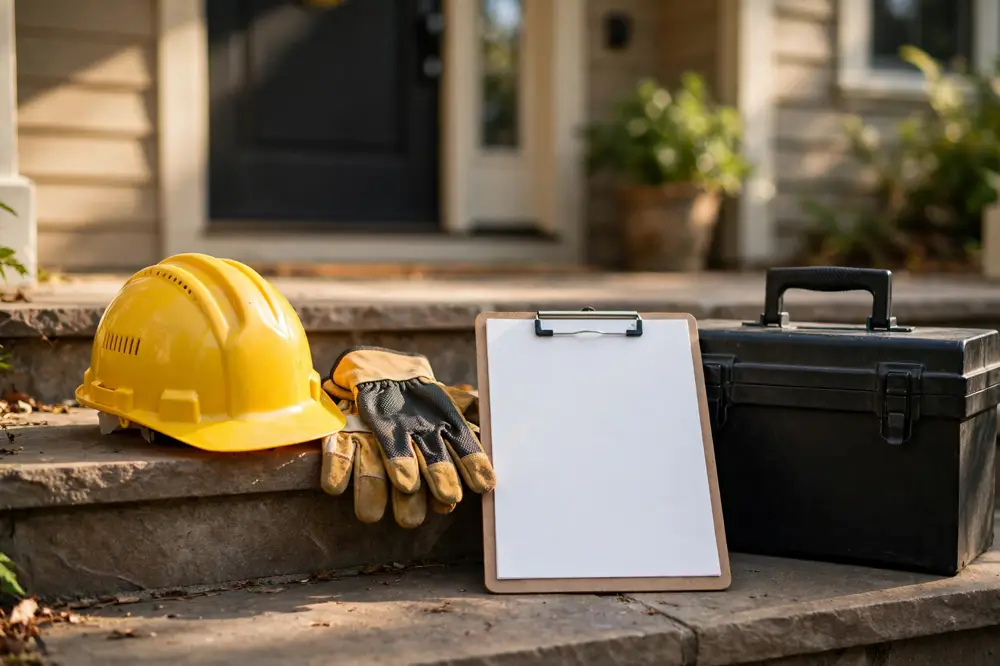
The middle ground: attempt with care
Some jobs are doable by a careful beginner but punish mistakes: tiling a small area, replacing a toilet’s internal flush mechanism, patching a larger section of drywall, hanging a heavy door, or laying click-lock flooring in a simple rectangular room. The pattern for success is the same in each case: watch the whole process once before starting, buy 10 percent extra material for cuts and errors, keep the original parts until the new ones work, and leave yourself an exit — a point at which a professional can still take over without undoing everything.
What DIY actually saves (and what it costs)
Doing a repair yourself removes the labor portion of the bill, which on small jobs is most of it, since call-out fees and minimum charges make tiny professional jobs disproportionately expensive. In exchange, you spend your own time, buy materials at retail rather than trade prices, and carry the risk of a mistake. The honest rule: DIY wins on simple, visible, reversible work — filling, sealing, fixing, hanging, painting — and loses on work where one error floods, burns, or weakens the house. It’s also worth knowing that some warranties and insurance conditions expect regulated work to be certified, one of several points covered in our guide to home insurance and renovation.
Before you start any repair
- Identify how to isolate water/power for the area — and test that it’s off
- Watch or read the full process once, start to finish
- Lay out tools and parts before anything comes apart
- Photograph assemblies before dismantling them
- Protect floors and surfaces; keep screws and parts in a tray
- Know your stop point — the moment you’ll call a professional instead
Frequently Asked Questions
What is the easiest home repair to learn first?
Filling and painting small wall holes and cracks. The materials are inexpensive, mistakes sand off, and the skill applies in every room. Sealing a bath or sink edge is a close second.
Which tools should a beginner buy first?
A cordless drill/driver, a tape measure and level, a basic screwdriver and wrench set, a hammer, and safety glasses. Add a stud finder and a caulk gun and you can handle most beginner repairs in this guide.
Can I do my own electrical repairs?
Only the simplest tasks permitted in your area, such as replacing a bulb or, in some regions, a like-for-like fitting with the power fully isolated. Anything involving new wiring, circuits, or the main panel should be done by a licensed electrician — it is both a safety and a legal issue.
When does calling a professional save money?
When the job is regulated (gas, structural, major electrical), concealed (inside walls or floors), or capable of causing expensive secondary damage, like plumbing under pressure. A professional’s fee is small next to repairing a flood or redoing unsafe wiring.
Confidence, built one safe job at a time
Start with filler, sealant, and a drill. Each small, finished repair teaches you how your home is put together — and sharpens your judgment about the jobs that were never yours to attempt. That judgment, more than any tool, is what a good DIYer actually owns.