
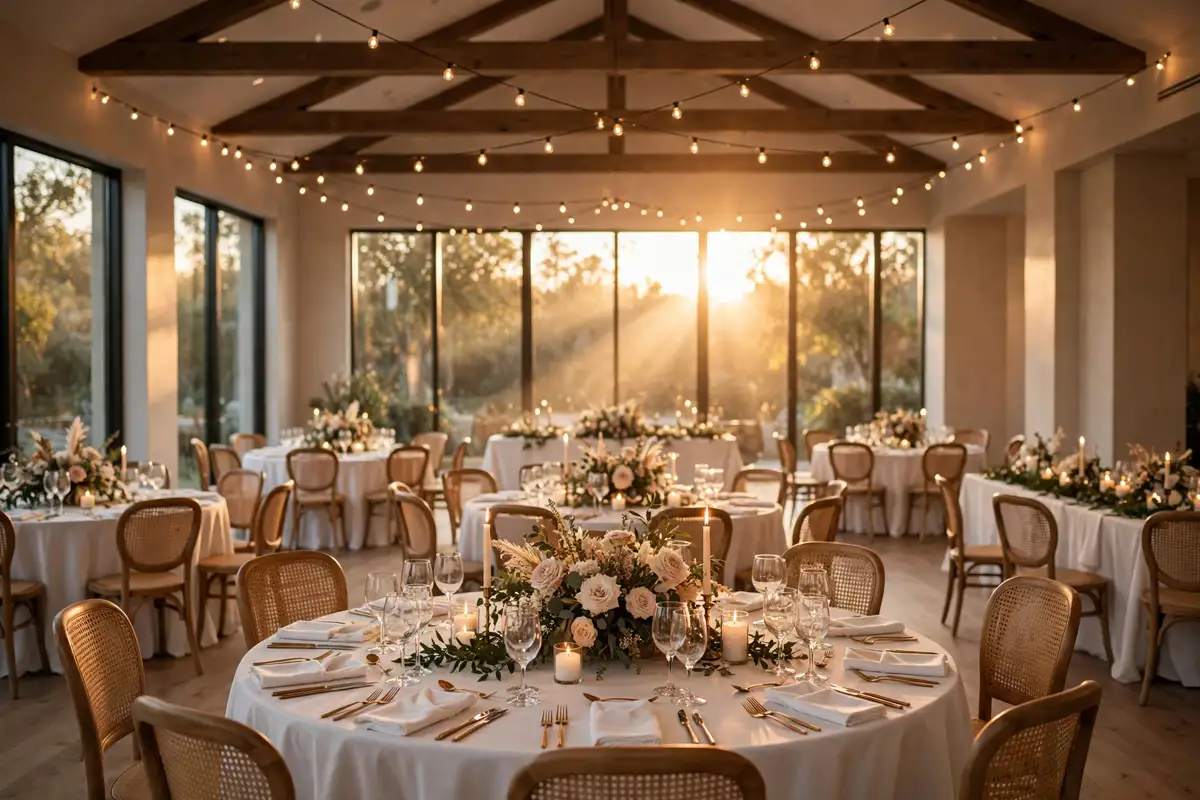
Every couple starts wedding planning with a number in mind, and almost every couple discovers the number was built on the prices they could see — the venue hire, the dress, the photographer. The budget rarely breaks on the big items. It breaks on the twenty small ones nobody mentioned: service charges, delivery fees, alterations, overtime, postage. A good wedding budget planner doesn’t just list categories; it reserves room for the invisible costs from day one, so the final month is about excitement instead of spreadsheets.
Use the framework below to build a budget that survives contact with real quotes.
Step 1: Set the total before you set the categories
Decide three numbers before booking anything:
- The real total — what you can genuinely spend without debt stress, including any family contributions that are actually confirmed.
- The working budget — about 90 percent of the total. The remaining slice is your contingency, and it is not optional.
- The guest count — the single biggest cost driver of the whole day. Venue size, catering, drinks, invitations, favors, and even cake tiers scale with this number, so fixing it early disciplines every other decision.
Step 2: Allocate by priority, not by habit
You’ll find plenty of percentage charts online, but treat them only as a starting shape. As a general pattern, couples often find the reception side — venue, food, and drink — takes close to half the budget, with photography and video, attire, music, flowers and décor, and the ceremony sharing most of the rest. The smart move is to rank your personal top three: if photography matters more than flowers, move money deliberately instead of spreading it evenly and pleasing nobody. Cut from the bottom of your priority list without guilt; guests remember food, music, and how the day felt far more than they remember chair sashes.
The big five categories, line by line
Venue
Beyond the hire fee, ask about: minimum guest spend, corkage if you supply drinks, security or cleaning fees, included furniture and linens, setup and teardown windows, and overtime charges if the party runs late. A “cheap” venue that rents you nothing can cost more than a pricier one that includes tables, chairs, staff, and a coordinator.
Catering
Per-head pricing hides the extras: service charges, staff costs, cake-cutting fees, rentals for glassware and serving equipment, and the tasting for two. Confirm whether tax and gratuity are inside the quote or added on top — this alone can shift a catering bill by a fifth or more.
Photography and video
Packages differ in hours, second shooters, albums, and delivery timelines. The hidden costs here are extra hours on the day (weddings rarely run to schedule), travel fees for locations outside a set radius, and printed albums ordered later at full price. Book the coverage hours generously; extending on the night is the most expensive way to buy them.
Attire and beauty
The dress or suit is only the headline. Add alterations (often a significant line on their own), shoes, accessories, undergarments, hair and makeup trials as well as the day itself, and dry cleaning or preservation afterward. If beauty spending is a concern, our beauty on a budget guide shows where professional services are worth it and where smart retail choices do the same job.
Music, flowers, and décor
DJ or band fees may exclude lighting, extra speakers for the ceremony space, and early-setup charges. Florists charge for delivery and installation, and popular dates carry minimums. Décor bought cheaply in bulk still needs transport, storage, and someone to set it up — or a line in the budget for someone to hire.

Wedding insurance: the small line that protects the big ones
Wedding insurance is one of the most overlooked budget lines, partly because it costs little relative to the day it protects. Policies vary, but they commonly address things like a venue or key supplier going out of business, cancellation or postponement for reasons beyond your control, and damage to attire, rings, or gifts. What they typically do not cover is a change of heart, or problems you already knew about when you bought the policy.
Practical approach: buy it early (cover often starts from the moment you pay), read the cancellation terms before signing large contracts, and keep every contract and receipt in one folder — insurers and venues alike resolve questions much faster with paperwork. This is general information about how such policies usually work, not a recommendation for a specific product; compare terms and check what your venue’s contracts already cover.
The hidden costs couples forget
- Marriage license and any certificate copies
- Postage for invitations and thank-you cards
- Alterations, accessories, and pre-wedding beauty trials
- Tips for suppliers, and meals for the crew working your day
- Transport between venues, and parking for guests
- Overtime for venue, photographer, and band when the schedule slips
- Delivery, setup, and collection fees for rentals and flowers
- A marriage-eve hotel room and a getting-ready breakfast
- Breakages, cleaning surcharges, and last-minute print jobs
- Gifts for attendants and parents

Track it like a project, not a wish list
A simple spreadsheet with four columns — estimated, quoted, actually paid, and balance due — prevents most wedding money stress. Note each payment deadline next to its line; supplier payments often cluster in the final month. Planning the whole event this way pairs naturally with our full event planning checklist, which covers timelines, guest-list management, and backup plans step by step.
Budget planner checklist
- Total, working budget (90%), and contingency set
- Guest count fixed before venue hunting
- Top three priorities ranked; cuts chosen from the bottom
- Venue quote checked for minimum spend, corkage, overtime
- Catering quote checked for tax, service, and rentals
- Photography hours booked generously
- Insurance compared and bought early
- Hidden-costs list added as real lines, not hopes
- Payment deadlines recorded for every supplier
Frequently Asked Questions
How much should I keep as a wedding contingency?
A common approach is around 10 percent of the total budget, held back from the start rather than scraped together later. It absorbs overtime, price changes, and the small forgotten items every wedding produces.
What is the biggest hidden wedding cost?
For many couples it’s the combination of service charges, taxes, and gratuities added on top of catering and venue quotes, followed closely by attire alterations. Always ask suppliers whether a quote is the final amount or the amount before additions.
Is wedding insurance worth it?
It depends on your contracts and risk. If large, non-refundable deposits are going to venues and suppliers months in advance, insurance that covers supplier failure or forced postponement can protect sums far larger than the premium. Read the exclusions carefully before deciding.
How do we cut costs without the day feeling cheap?
Cut guest count before cutting quality — it reduces almost every per-head cost at once. Then trim low-priority décor, choose in-season flowers, and spend the savings on the food, music, and photography your guests will actually remember.
A budget that lets you enjoy the day
The couples who enjoy their wedding mornings are rarely the ones who spent the most; they’re the ones who knew exactly what everything cost and had a cushion for surprises. Build the plan early, write the hidden costs down, protect the big deposits, and let the spreadsheet — not the final month — do the worrying.