
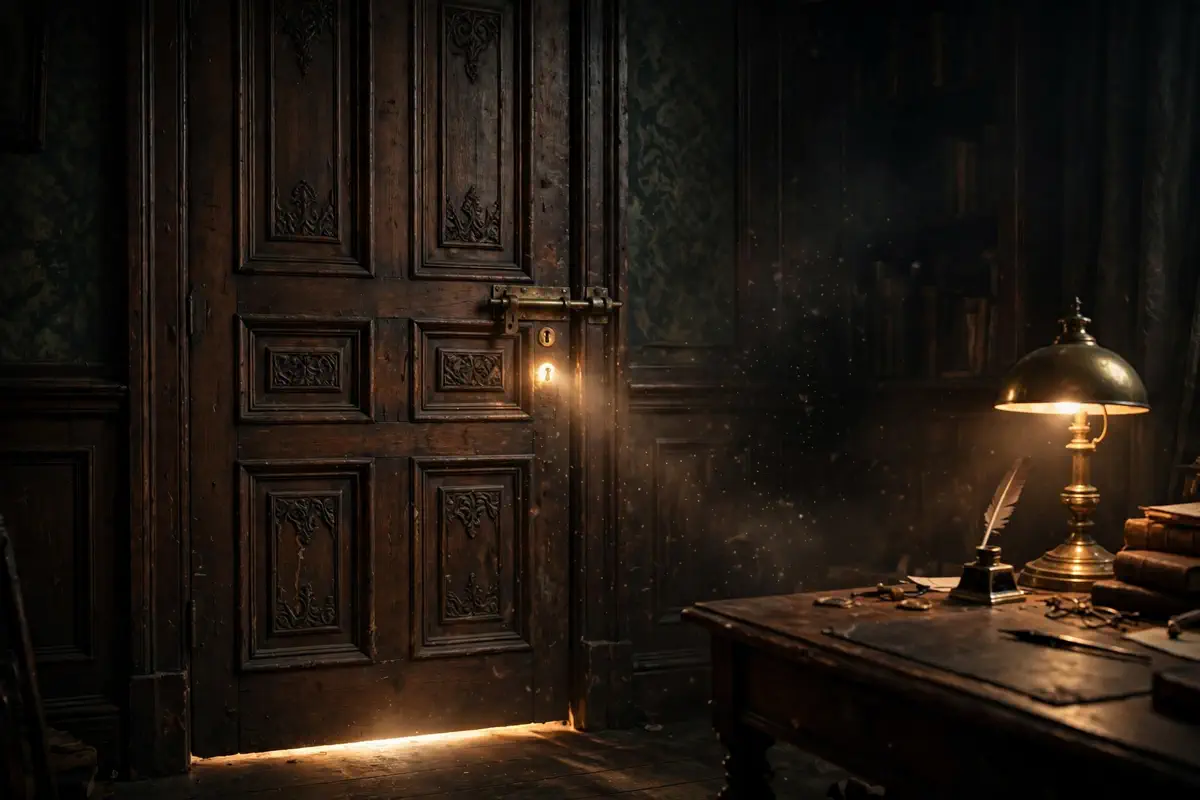
A body is found in a room locked from the inside. The windows are barred, the chimney is too narrow, and nobody could have got in or out. Yet somebody did. The locked-room mystery is the oldest trick in detective fiction, and it still works because the puzzle is never really about the lock. It is about what you, the reader, assumed without noticing.
This guide breaks down how these stories are built: the classic solutions, the clues planted in plain sight, the red herrings designed to waste your attention, and the ending details most readers skim past.
What Counts as a Locked-Room Mystery?
A locked-room mystery presents a crime — usually a murder or an impossible theft — in a space that appears completely sealed. The door is locked or bolted from inside. The windows are latched. There is no secret passage, or if there is, finding it is part of the game.
The key word is appears. Every fair locked-room story contains a real, physical explanation: the room was never truly sealed, the crime did not happen when you think it did, or the victim — or the culprit — is not who you assumed. Writers who play fair give you every clue the detective gets; writers who cheat hide the one fact that matters.
The same habits of assumption that hide a fictional culprit also explain experiences like the everyday mystery of déjà vu, where the brain insists something impossible has happened when something quite ordinary has.
The Classic Solutions, Explained
Nearly every locked-room ending uses one of a handful of mechanical ideas. Once you know them, you will start spotting them everywhere.
The crime happened earlier or later than it seems
The most elegant trick changes the timeline, not the room. The victim was killed before the door was locked, and the “sealed” room is only sealed afterward. Or the death is staged to look later than it was: a recording, a rigged clock, a body kept warm, a witness who heard a “shot” that was really a firecracker or a slamming book. If the timeline is wrong, the locked door stops mattering entirely.
The room was locked from outside — by a trick
String through a keyhole, a bolt nudged with a tool, ice used as a temporary latch that later melts, a key duplicated or returned by post. These solutions feel mechanical because they are, but a good writer buries the one odd detail — a wet keyhole in summer, a thread in the corridor — where you will step over it.
The murder weapon was never in the room — or left by itself
Icicles that melt, weapons thrown in from outside, poison given hours before, a trap set long in advance. When the weapon is missing, readers search the room. The writer wants you searching the room. The weapon was the room: a falling object, a rigged fixture, a piece of furniture.
The culprit was inside all along
Hidden in the room, mistaken for the victim, or disguised as one of the rescuers who “discovered” the body. The boldest version: the person who breaks down the door is the killer, arriving with the crowd they themselves summoned.
There was no murder at all
Accident, suicide staged as murder, or a death that two innocent people each believe they caused. These endings reframe every clue, which is why they are the hardest to do fairly — and the most satisfying when they land.

Clues Hidden in Plain Sight
Fair-play writers follow an unwritten deal: the solution must be available to the reader, even if it is camouflaged. The camouflage usually takes these forms:
- The clue disguised as description. A paragraph about the weather, the furniture or a pet is doing double duty. If a detail gets a full sentence, ask why.
- The clue disguised as a joke. Comic relief moments are safe houses for evidence. Readers relax; writers know it.
- The clue everyone reacts to wrongly. A character dismisses something too fast, or a witness describes the right detail with the wrong interpretation attached.
- The repeated detail. Mentioned twice, it is set decoration. Mentioned three times, it is load-bearing.
- The missing detail. Nobody mentions hearing the key turn. Nobody asks who wound the clock. In locked-room stories, silence is a clue.
If you enjoy training your eye for this kind of trickery, our collection of brain teasers that reveal how your mind jumps to the wrong answer works the same muscle: the answer is present from the start, and your assumptions hide it.

Red Herrings: The Decoys That Waste Your Attention
A red herring is a clue that leads somewhere real but irrelevant. The suspicious stranger really was outside the window — because he was meeting someone else. The heir really did lie about his evening — to hide an affair, not a murder. Good red herrings obey three rules:
- They must be true. The fact itself is never false; only your conclusion is.
- They must cost the detective something. Time, trust, or a wrong arrest.
- They must resolve. A red herring that is never explained is just a loose thread, and readers can tell the difference.
Writers ration them carefully. Too few and the solution is obvious by page ten. Too many and the reader stops trusting the story at all.
The Endings Most Readers Miss
Here is the secret experienced mystery readers learn: the locked-room solution is rarely the real ending. The real ending is the paragraph after it.
- The motive reveal. How the killer entered is mechanics. Why is the story. Many endings quietly reverse the motive you assumed — the inheritance was worthless, the blackmail was a misunderstanding, the revenge was aimed at the wrong generation.
- The detective’s mistake. In the best stories, the detective’s first solution is wrong, and the text tells you so if you watch what they do rather than what they say.
- The second locked room. Some stories hide another sealed space inside the first: a locked drawer, a sealed letter, a closed heart. The physical trick gets the applause; the emotional one gets the reread.
- The narrator’s blind spot. If the story is told by a companion, check what the companion never describes. First-person narrators in this genre have been lying by omission since the form began.
How to Read the Next One Like a Detective
- Write down the timeline before the detective explains it. Timeline tricks collapse under a list.
- List everyone who touched the door, the key and the room.
- Mark every detail the author spends a full sentence on.
- Ask of every suspicious fact: true — but does it mean what I think it means?
- When the solution arrives, reread the first chapter. A fair story reads like a better book the second time.
Frequently Asked Questions
What is the most common locked-room solution?
The timeline trick: the crime happened before the room was sealed, or the death was staged to look later than it really was. It is the most common because it is the fairest — every fact you were given stays true.
Do locked-room mysteries always have a logical solution?
In fair-play detective fiction, yes: the explanation is mechanical and possible, even if unlikely. Some modern stories deliberately choose ambiguous or supernatural-seeming endings, but the classic form promises a real answer hidden in the text.
Why is it called a red herring?
The phrase comes from the old practice of dragging a strong-smelling smoked fish across a trail to throw hounds off a scent. In fiction it means any true-but-misleading clue planted to pull your attention away from the real trail.
What should I read if I like locked-room mysteries?
Start with the classics of the golden age of detective fiction, where the fair-play rules were set, then move to modern writers who still honor them. And for a story-length example written for this site, try The Vanishing at the Village Fair, our original tale built on the same rules.
The locked room was never the point. The point is the moment you realize the door you were staring at was never the way in — and that the author showed you the real way, politely, three chapters ago.
2 thoughts on “The Locked-Room Mystery Explained: Clues, Red Herrings and the Endings Readers Miss”