

Almost everyone has a family mystery: a great-grandparent nobody can quite place, a name that changes spelling between documents, a story about “coming over on the boat” with no ship attached. A generation ago, solving it meant train trips to record offices. Today, billions of historical records are digitized, and museums and archives have put huge parts of their collections online. This guide shows you how to research your family history online the way archivists recommend — starting with what you know, working backward one generation at a time, and treating every family legend as a hypothesis to test, not a fact to defend.
Step 1: Start With What You Already Have
Professional genealogists begin at home, not on the internet. Gather full names, dates and places for yourself, your parents and your grandparents. Then raid the family archive: letters, photographs with names penciled on the back, family Bibles, military papers, naturalization certificates, old address books. Interview your oldest relatives now, while you can, and record them — names of siblings, home villages, occupations and migration stories are the details records are matched against later. Write everything into a simple family tree as you go, and mark each fact with where it came from.
Step 2: Work the Census

Census records are the backbone of family research because they capture whole households at regular intervals. The US federal census runs every ten years from 1790; early ones name only heads of household, but from 1850 they list every person, and later returns add relationships, birthplaces, parents’ birthplaces, occupations and immigration years. British census returns survive for 1841 through 1921 and are equally rich. A practical method: find your ancestor in the most recent census open to the public, then step backward decade by decade, watching the household grow, shrink and move. Remember that ages in censuses are frequently a year or two off — people rounded, guessed or simply misreported.
Step 3: Add the Vital Records — and the Journey
Births, marriages and deaths anchor a tree. Civil registration began in England and Wales in 1837 and in Scotland in 1855; in the United States it was handled state by state, with many states starting in the late 1800s or early 1900s and churches keeping earlier records. Marriage records are often the most valuable single document because they can name both sets of parents. For immigrant ancestors, passenger lists and naturalization papers are the next layer: major arrival ports such as New York (Castle Garden, then Ellis Island from 1892) kept lists that may give ages, occupations and last residences. If your ancestors lived in the era those records describe, life in early America and everyday life in Victorian Britain will help you picture the world the documents came from.
Step 4: Use Museums and Archives Like a Researcher
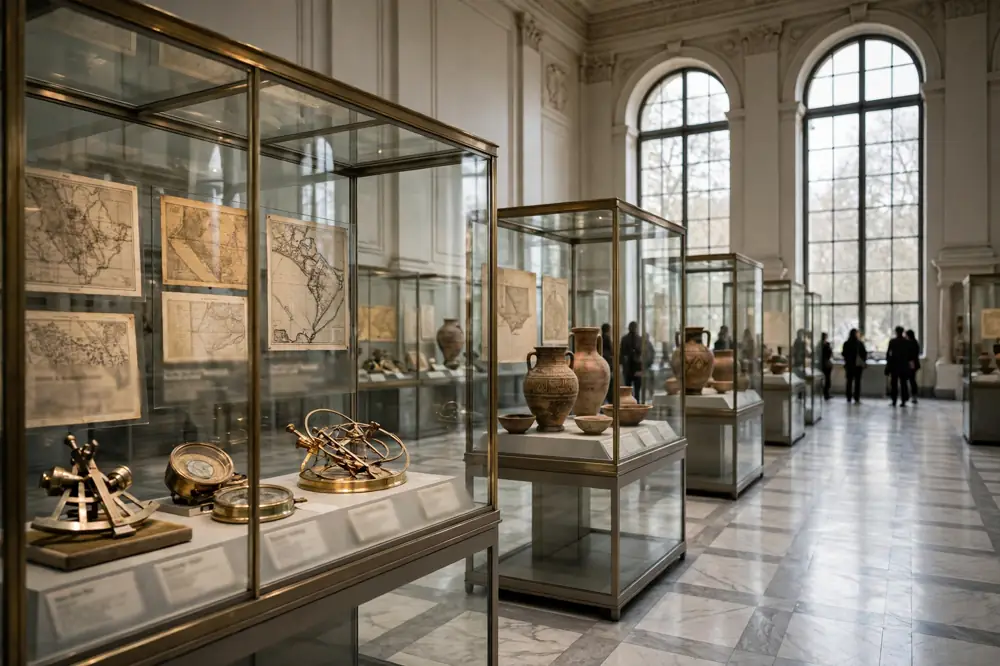
National archives — such as the US National Archives and The National Archives in the UK — hold military service records, pension files, court records, land grants and much more, and both offer free online catalogs and growing sets of digitized documents. Local archives and record offices hold what national ones do not: workhouse registers, school logs, parish records, wills and property deeds. Museums matter too: regimental museums, local history museums and migration museums hold photographs, artifacts and name indexes you will not find elsewhere. Before any visit, search the online catalog, note exact reference numbers, and email the archivist — archives staff routinely answer simple queries and can tell you whether a trip is worth it.
Step 5: DNA Testing — Powerful, With Caveats
Consumer DNA tests from genealogy services can confirm paper research and break through brick walls by matching you with relatives who hold the other half of a story. They estimate ethnic origins too, but treat those percentages as broad and changeable — companies update them as their reference data improves. Read the privacy terms before testing: you are sharing genetic information about yourself and, indirectly, your relatives, and results occasionally surface surprises, including misattributed parentage. DNA works best as a partner to documents, not a replacement for them.
Common Pitfalls
- Same name, wrong person. Every parish had three men with your ancestor’s name. Match on the whole cluster — spouse, children, occupation, address — not the name alone.
- Spelling is fluid. Clerks wrote what they heard. Search wildcards and sound-alike variants before concluding a record does not exist.
- Family legends inflate. “Related to royalty” and “changed the name at Ellis Island” are beloved stories; the second is largely a myth, since passenger lists were written at departure from the immigrant’s own answers. Test stories kindly, but test them.
- Unsourced online trees copy errors. Treat other people’s trees as clues, then verify each fact against an original record yourself.
Frequently Asked Questions
Is family history research free?
Much of it can be. National archives’ catalogs, the FamilySearch website run by the Church of Jesus Christ of Latter-day Saints, library editions of subscription databases, and many digitized newspapers are free. Subscription genealogy services mainly add convenience and exclusive record sets; courses and webinars from archives and genealogical societies can sharpen your method cheaply.
How far back can most people trace their family?
With documents alone, many people of British or American descent can reach the 1700s or 1600s; beyond that, records thin out sharply except for landowners and notable families. Progress depends heavily on record survival, not on your skill.
What is the single best record to find first?
A marriage record or a census entry that shows your ancestor as a child in their parents’ household — both connect two generations in one document, which is the engine of the whole method.
The Short Version
Start at home, walk backward through the censuses, anchor each generation with birth, marriage and death records, then let archives, museums and — carefully — DNA fill the gaps. Do it that way and genealogy stops being a pile of names and becomes what it really is: your family’s chapter of history, with footnotes.