
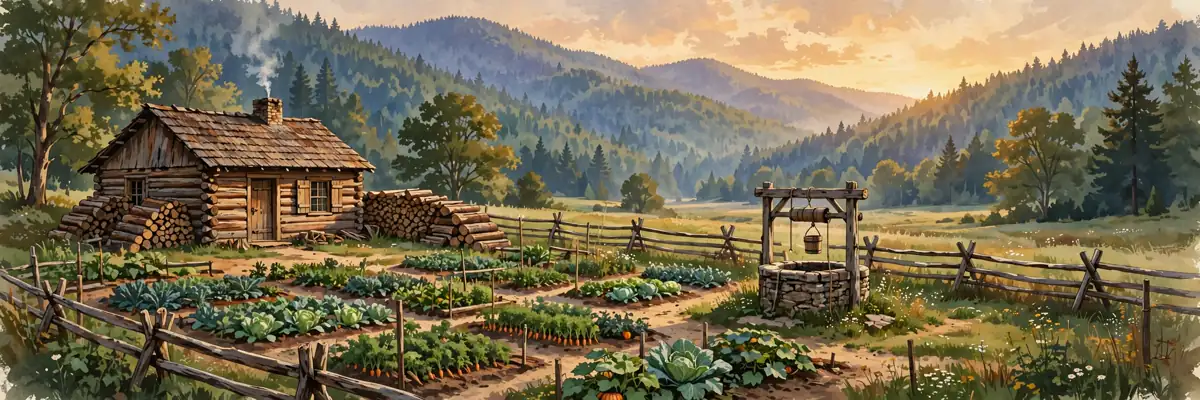
Imagine a world with no light switch, no engine, no refrigerator and no message that could travel faster than a horse. That was everyday reality in early America — roughly the colonial era through the early 1800s. Life was slower, more physical and far more local than ours, yet it was also inventive: households and whole towns ran on skills, seasons and neighborly exchange. This article walks through the homes, jobs, money and travel of that world, so you can picture what ordinary days actually felt like before modern technology arrived.
Homes: One Fire, Many Jobs
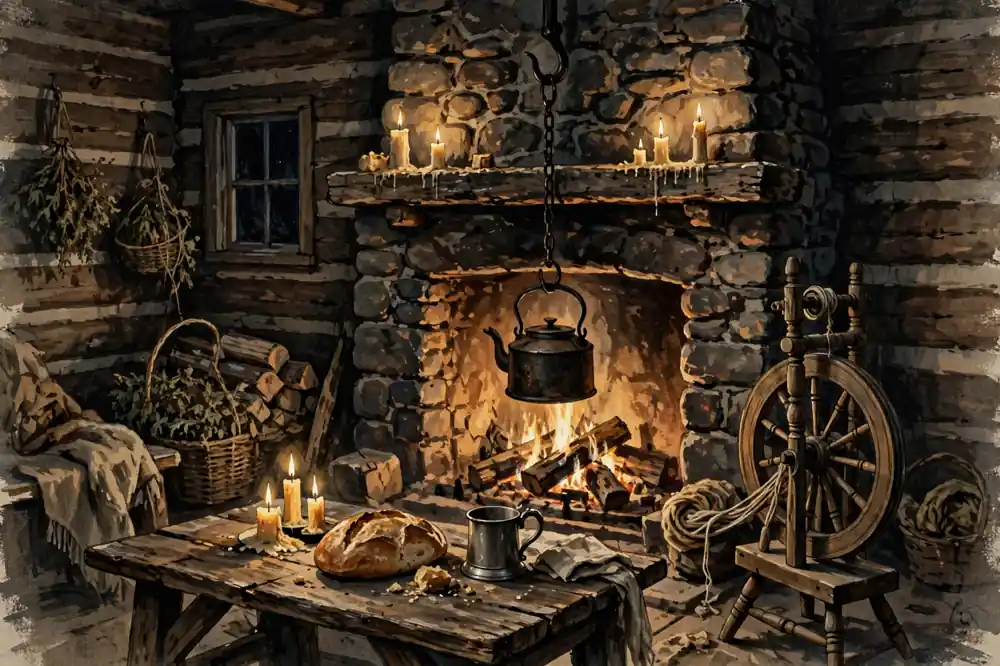
The center of the early American home was the fireplace. It provided the only heat, most of the light after dark, and the cooking — meals were made in iron pots over open flames or in brick ovens. Rural families in newly settled areas often began in log cabins or simple timber-framed houses; wealthier households in older towns built larger homes, but even those had no running water, no indoor plumbing and no insulation worth the name. Water came from a well or spring, carried in by the bucket. Light after sunset meant candles or oil lamps, which were expensive enough that most work followed the sun. Furniture was sparse and practical, much of it homemade, and children commonly shared beds — and bedrooms — with siblings.
Winter was the season every household planned around. Food had to be preserved in autumn — smoked, salted, dried or stored in root cellars — firewood stacked, and candles and cloth made or bought. A bad harvest or a long freeze was not an inconvenience; it was a threat.
Jobs: The Farm Ruled Everything
The overwhelming majority of early Americans worked the land. Around the time of the first US census in 1790, most families earned their living in agriculture, growing much of what they ate and trading the surplus. Around the farm economy stood the skilled trades: blacksmiths, wheelwrights, coopers, millers, tanners and shoemakers, often working from workshops attached to their homes. Children worked from a young age, girls typically in the endless labor of cooking, sewing, spinning and gardening, boys in fields and barns or apprenticed to a trade.
In port cities, merchants, sailors, shipwrights and dockworkers served the Atlantic trade. And no honest account can omit that a large part of early America’s economy — especially its plantation agriculture — rested on the forced labor of enslaved Africans and African Americans, a central fact of the era that shaped its wealth and its politics.
Money: Barter, Foreign Coins and Paper Nobody Trusted
Early America ran on a patchwork of money. Cash was scarce in the countryside, so barter was routine: grain, labor, livestock and craft goods changed hands in place of coin. The coins that did circulate were often foreign — the Spanish dollar, known as a “piece of eight,” was so common it remained legal tender in the United States until 1857. During the Revolution, the Continental Congress printed paper money so freely that it collapsed in value, giving English the phrase “not worth a Continental.” The new federal government steadied things in the 1790s with a national mint, a decimal dollar system and, in 1791, a national bank — foundations of the system Americans still use. Compare the British world these colonists came from in American and British history’s turning points.
Travel: Slow, Muddy and Memorable
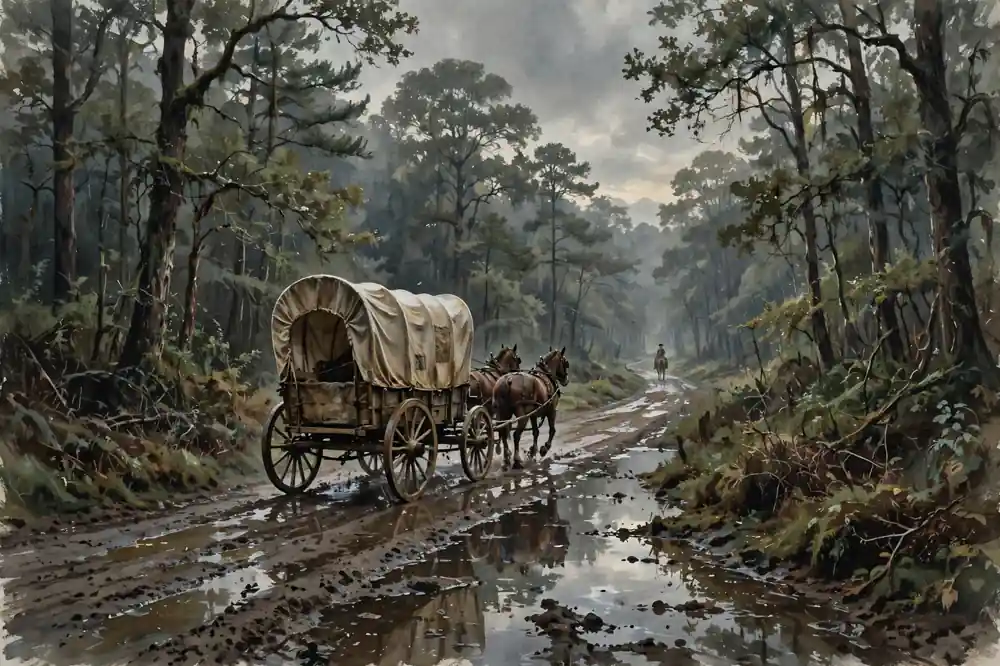
Most people rarely traveled far. A trip of 30 miles could take a full day. On foot or horseback you made perhaps 20 to 30 miles a day in good conditions; stagecoaches on the better turnpike roads managed more, but roads turned to mud in spring and dust in summer, and rivers without bridges meant ferries or dangerous fords. Families moving west loaded everything into wagons — the famous Conestoga wagons of the Pennsylvania roads among them — while rivers did the heavy lifting for freight: flatboats floated goods down the Ohio and Mississippi, and after Robert Fulton’s steamboat success in 1807, steamboats began transforming river travel. News traveled no faster than people did, which is why letters were treasured — some changed the world, as the letters that changed history shows. For ordinary daily life under similar limits in Britain, see everyday life in Victorian Britain.
Health, School and Community
Doctors were few, distances long, and much medicine was home medicine: herbal remedies, rest and the family copy of a medical guidebook. Epidemics of smallpox, cholera and yellow fever periodically swept towns that had no germ theory to explain them. Schooling for most children meant a one-room schoolhouse attended between farm seasons, with reading, writing and arithmetic taught from a handful of books — though literacy rates in New England were notably high for the era. The community institutions that tied it together were churches, taverns, markets and militia musters: part worship, part news exchange, part social safety net.
Frequently Asked Questions
What did early Americans eat?
Corn in many forms (bread, mush, hominy), pork, beans, squash, garden vegetables, dairy where cattle were kept, and game and fish where available. Preserved foods — salted meat, dried fruit, pickles — carried families through winter.
How long did it take to cross the Atlantic?
Typically six to eight weeks by sailing ship in the 1700s, sometimes much longer in bad weather. The same crossing by steamship in the mid-1800s shrank to about two weeks, one sign of how quickly technology was about to change everything.
Did early American children go to school?
Many did, especially in New England towns that maintained schools, but attendance followed the farming calendar and varied widely by region and family means. Apprenticeship — learning a trade by working for a master — was an equally common form of education.
The Short Version
Early American life ran on firelight, muscle power and patience: homes heated by one hearth, money that might be a bag of grain or a Spanish coin, journeys measured in days per county. Within a few generations, steam, rail and telegraph would dismantle that world — which is exactly why picturing it clearly matters for understanding everything that came next.