
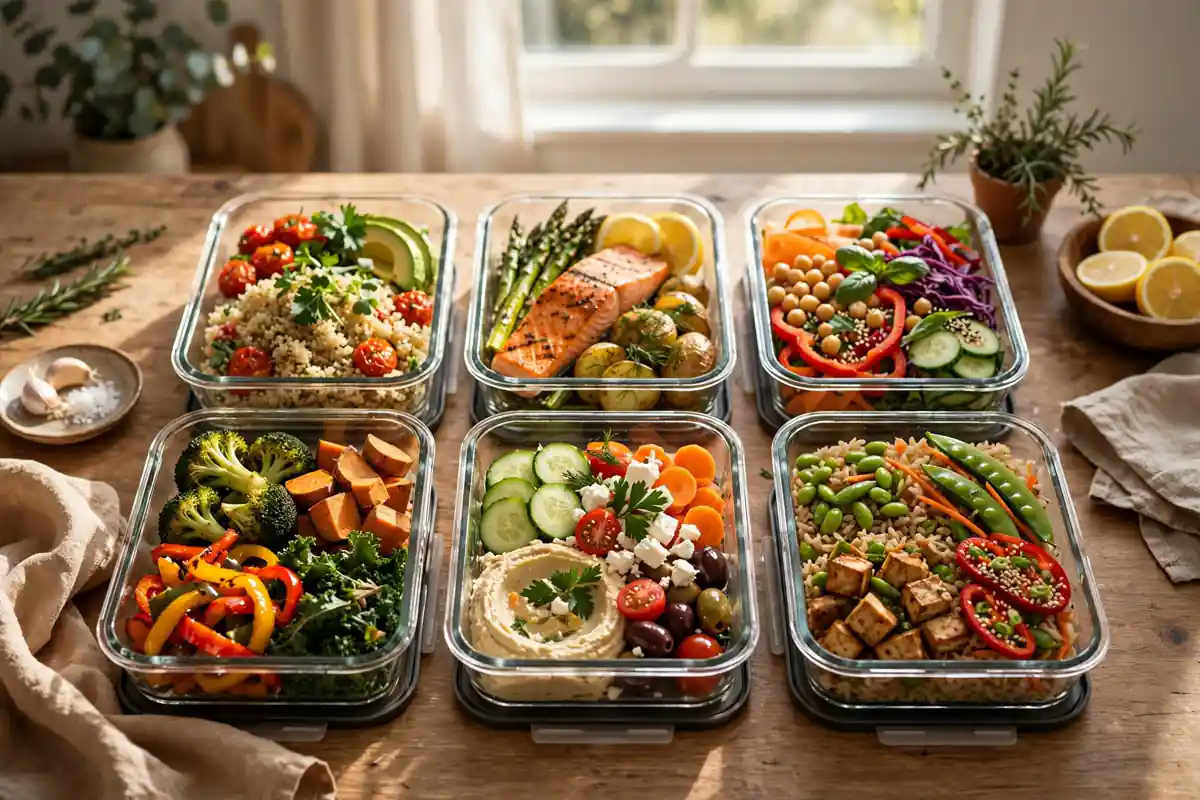
Whether your goal is losing fat, building muscle, or simply fueling training well, the difference between people who eat “on plan” and people who mean to is usually one thing: a plan made before the week got busy. Meal planning for fitness does not require bodybuilder precision or a fridge full of identical containers. It requires understanding calories and macros at a practical level, a flexible template for your meals, and a simple weekly rhythm. This guide walks through all three.
A quick note before we start: This article is general nutrition information and education only. It is not medical advice or a personal diet prescription. Calorie and macro needs vary widely with body size, activity, health conditions, and medications. If you have diabetes, kidney disease, an eating disorder history, or other medical concerns, work with a doctor or registered dietitian before changing how you eat.
Calories: The Budget Everything Else Fits Into
Calories are simply the energy in food, and they set the direction of your body weight:
- Eat consistently below the energy you use, and weight trends down.
- Eat consistently above it, and weight trends up.
- Eat near maintenance, and weight holds roughly steady while training improves strength and fitness.
You do not need a perfect number. Online calculators give a rough maintenance estimate from your size, age, sex, and activity; treat it as a starting guess, then adjust using reality — if your weight trend over three to four weeks is flat when you wanted loss, trim a small amount (a snack-sized portion per day, roughly); if you are losing faster than intended or training feels drained, add a little back. The trend is the truth; the calculator is just the first draft. For the sustainable fat-loss philosophy behind these adjustments, see Weight Loss Without Crash Diets.
Macros: What Protein, Carbs, and Fat Actually Do
Protein — the priority macro
Protein builds and repairs muscle, and it is the most filling nutrient per calorie. People who train generally do well aiming for a solid portion at every meal — roughly a palm-to-two-palms sized serving of foods like chicken, fish, eggs, Greek yogurt, tofu, beans, or lean meat. If you like numbers, a commonly used target for active people is around 1.6 grams per kilogram of body weight per day, but consistent “enough at each meal” beats anxious precision.
Carbohydrates — training fuel
Carbs power hard sessions and refill energy stores. Center them on whole foods most of the time — oats, rice, potatoes, bread, fruit, beans — and place a larger share around training if that feels good. Carbs are not the enemy of any fitness goal; total intake and consistency matter more than fear of one macro.
Fats — essential, satisfying, and calorie-dense
Fats support hormones and absorb key vitamins, and they make food taste good — but at roughly double the calories per gram of protein or carbs, portions matter. A thumb-to-palm-sized serving per meal from olive oil, nuts, seeds, cheese, eggs, or fatty fish is a practical guide.
Fiber and water — the quiet performers
Vegetables, fruits, legumes, and whole grains keep digestion comfortable and hunger manageable, and adequate water supports training performance. Build both into the plan by default rather than as afterthoughts.
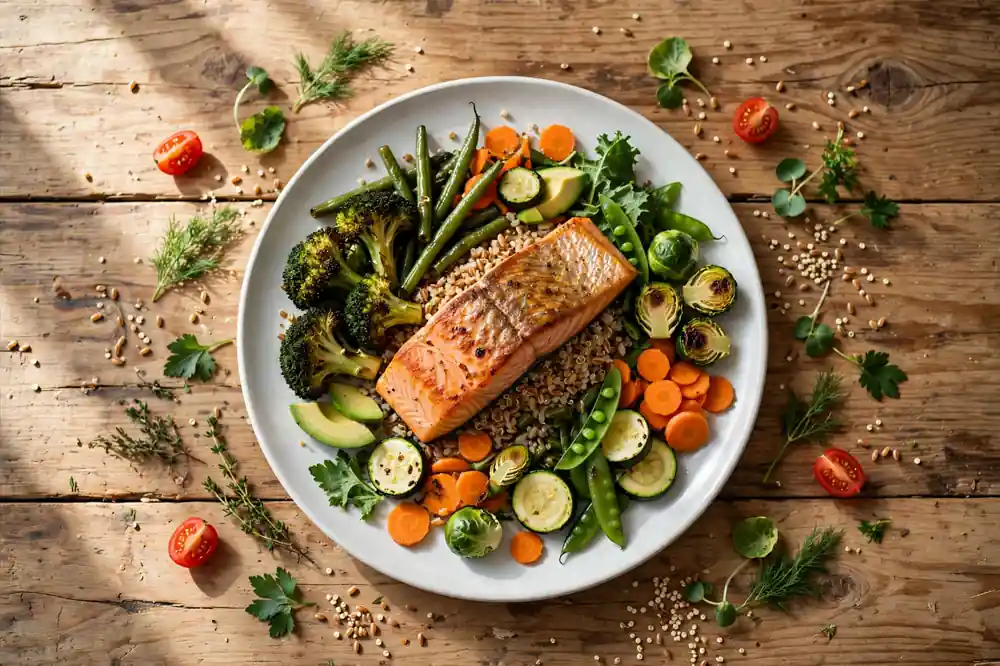
The Flexible Template: Build Meals Without a Spreadsheet
Instead of tracking every gram forever, compose most meals from a simple plate:
- A protein anchor (palm-plus portion)
- Vegetables or fruit (a fist or two, more if you like)
- A carb portion matched to your activity (a cupped handful or two — more on training days, less on rest days)
- A fat portion (a thumb or two)
- Flavor without friction — sauces, spices, pickles, and herbs keep the system enjoyable, which is what makes it a system instead of a sentence.
Goals adjust the template, not the foods: for fat loss, lean slightly on vegetables and protein and be deliberate with fats and liquid calories; for muscle gain, add a snack and slightly larger carb portions, especially around training; for performance and health maintenance, keep the template and let appetite and the scale trend guide small tweaks.
A Weekly Planning Rhythm That Survives Real Life
Plan four or five dinners, not seven. Leave room for leftovers, a social meal, and life happening.
Cook proteins and grains in batches. A tray of chicken, a pot of rice, a batch of beans — mixed and matched across the week with different sauces and vegetables so nothing feels repeated.
Keep emergency meals stocked. Eggs, frozen vegetables, canned fish, tortillas, and yogurt assemble into a decent meal in ten minutes, which is the moment most plans die.
Prep the environment, not just the food. Visible fruit, a stocked fridge, and treats stored out of sight do the quiet work — the same design principle behind The Psychology of Habits.
Support the training you are actually doing. If you are following the sessions in Strength Training at Home, make sure protein shows up at every meal and you are not trying to build strength on a steep deficit — pick one primary goal per season.

Eating Out and Social Meals Without Derailing
You do not need to be the person with a food scale at a restaurant. Scan the menu for a protein anchor, ask for dressings and sauces on the side when you want them, enjoy the meal, and return to your normal template at the next meal — not next Monday. Flexible dieting works precisely because single meals do not matter; patterns do. A plan that cannot survive a birthday dinner is not a plan for a human life.
Frequently Asked Questions
Do I have to track calories and macros forever?
No. Tracking is a learning tool. A few weeks of honest tracking teaches you what portions of your usual foods actually contain; most people then maintain results with the plate template and occasional check-ins when progress stalls.
How much protein do I really need?
Active people building or protecting muscle commonly aim around 1.6 grams per kilogram of body weight per day, spread across meals. If numbers feel stressful, simply include a solid protein portion at every meal and a protein-rich snack on training days — that pattern gets most people close.
Should I eat differently on rest days?
Small adjustments are enough — many people naturally eat slightly less when less active, often by trimming one carb portion. Protein stays consistent every day, since muscle repair does not take rest days off.
What if I am hungry all the time on my plan?
Chronic hunger usually means the deficit is too steep, protein and fiber are too low, or sleep is short. Add vegetables and protein first, slow the pace of loss, and check your sleep — hunger management is a design problem, not a character test.
The Bottom Line
Set your direction with calories, protect your muscle and fullness with protein, fuel training with carbs, and keep fats deliberate. Plan the week loosely, cook in batches, stock emergency meals, and adjust by four-week trends instead of daily noise. Flexible, boring, repeatable — that is what a diet that works actually looks like.
1 thought on “Meal Planning for Fitness Goals: Calories, Macros and Flexible Diet Plans”