

Cooking forgives improvisation; baking rewards precision — but only a handful of precise habits actually matter. Measure flour correctly, understand what your leavener does, mix just enough, and use an oven that is truly at temperature, and even a first attempt at banana bread or cookies comes out the way the photo promised. This guide explains the science behind those four habits, then gives you two beginner recipes that are hard to ruin and teach nearly every core technique between them.
Part 1: Measuring — Where Most Baking Fails
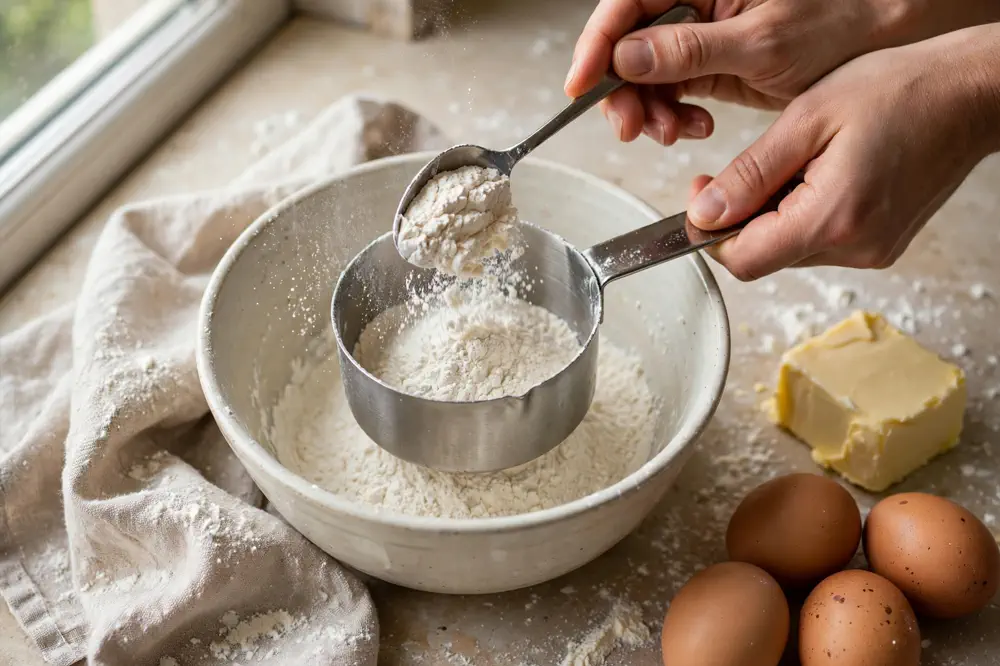
The flour problem. Scooping a measuring cup directly from the flour bag packs in extra flour — sometimes 20–30 percent more than the recipe intends, which is the difference between tender and doorstop. Two fixes:
- Spoon and level: spoon flour into the cup until heaped, then sweep the excess off with a knife. Free and reliable.
- Weigh it: 1 cup of all-purpose flour = 120 g (4¼ oz). A basic kitchen scale is the single best baking purchase a beginner can make; every recipe below lists weights for this reason.
Other ingredients. Brown sugar is measured packed unless a recipe says otherwise. Baking powder and baking soda are always measured level. Liquids go in a clear measuring jug at eye level. Butter conversions: 1 stick = ½ cup = 8 tablespoons = 113 g.
Room temperature matters. Eggs and butter at room temperature (about 65–70°F / 18–21°C) mix into smooth, even batters that trap air properly. Cold eggs can curdle a creamed batter. Short on time? Put eggs in warm water for 10 minutes and cut butter into small cubes — it softens in about 15.
Part 2: Mixing and the Leaveners
Baking powder and baking soda are not interchangeable. Baking soda needs an acid partner (buttermilk, yogurt, lemon juice, brown sugar, cocoa) and starts working the moment it gets wet, so soda-leavened batters should reach the oven promptly. Baking powder is soda plus its own acid, usually double-acting: it puffs a little in the bowl and again in the oven’s heat. Both lose power with age — test baking soda with a splash of vinegar and powder with hot water; if neither fizzes vigorously, replace it.
Mixing has one rule: just enough. Once flour meets liquid, stirring develops gluten. For cakes, muffins, and quick breads, stir only until no dry flour remains — lumpy batter is correct batter. Overmixed muffins tunnel and toughen; overmixed cookie dough spreads less but bakes dense. Creaming butter and sugar for cookies is the opposite situation: beat 2–3 minutes until pale and fluffy, because those trapped air pockets are part of the lift.
Part 3: Temperature — Trust the Thermometer, Not the Dial
Oven dials are notoriously optimistic or lazy, often off by 25°F (about 15°C) or more. An inexpensive oven thermometer tells the truth, and knowing your oven runs hot explains a year of dark-bottomed cookies in one glance. Other essentials: preheat fully (20 minutes is realistic), bake in the center of the oven, and rotate the pan halfway if your oven has hot spots. Doneness cues beat timers — banana bread is done when a skewer comes out with a few moist crumbs, cookies when the edges are set and the centers still look slightly soft; they finish on the hot pan.
Recipe 1: Foolproof Banana Bread
Makes 1 loaf (9×5 in / 23×13 cm) · Prep 15 minutes · Bake 55–65 minutes
Ingredients
- 3 very ripe bananas (about 1½ cups mashed / 340 g)
- ⅓ cup (75 g) melted butter or neutral oil
- ¾ cup (150 g) sugar (white, brown, or half and half)
- 1 large egg, room temperature; 1 tsp vanilla extract
- 1½ cups (180 g) all-purpose flour
- 1 tsp baking soda, ½ tsp salt, ½ tsp cinnamon (optional)
- Optional: ½ cup chopped walnuts or chocolate chips
Steps
- Heat the oven to 350°F (175°C). Grease the loaf pan or line it with parchment.
- Mash the bananas with a fork in a large bowl — a few lumps are fine. Whisk in the butter, sugar, egg, and vanilla.
- Sprinkle the flour, soda, salt, and cinnamon over the top and fold gently until just combined. Fold in any add-ins. Do not overmix.
- Bake 55–65 minutes, until a skewer inserted in the center comes out with only moist crumbs (melted chocolate chips will fool you — test in two spots).
- Cool in the pan 10 minutes, then on a rack. Banana bread slices best after an hour and keeps, wrapped, 3–4 days at room temperature or up to 3 months frozen, sliced. It also toasts beautifully for the make-ahead breakfasts in our quick breakfast ideas.
Recipe 2: Classic Chocolate Chip Cookies
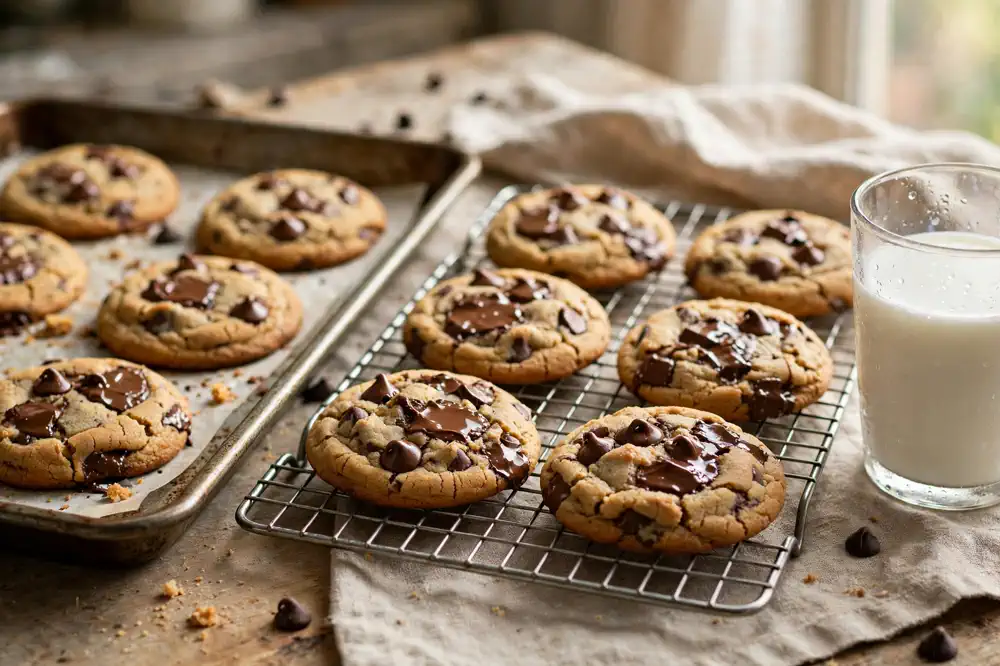
Makes about 24 cookies · Prep 15 minutes + 30 minutes chilling · Bake 10–12 minutes per tray
Ingredients
- ½ cup (113 g) butter, softened
- ½ cup (100 g) brown sugar, packed; ¼ cup (50 g) white sugar
- 1 large egg, room temperature; 1 tsp vanilla extract
- 1¼ cups (150 g) all-purpose flour
- ½ tsp baking soda, ½ tsp salt
- 1 cup (170 g) chocolate chips
Steps
- Cream the butter and both sugars with a mixer or wooden spoon for 2–3 minutes until pale and fluffy. Beat in the egg and vanilla.
- Add flour, soda, and salt; mix on low just until combined, then fold in the chips.
- Chill the dough at least 30 minutes (up to 3 days). Chilling firms the butter, so the cookies spread less and bake up thick with better flavor.
- Scoop tablespoon-and-a-half balls onto a parchment-lined tray, spaced 2 inches (5 cm) apart. Bake at 350°F (175°C) for 10–12 minutes, until the edges are golden and set but the centers still look slightly soft.
- Leave on the tray 5 minutes — they finish setting as they cool — then move to a rack. Store airtight for up to 5 days, or freeze scooped raw dough balls for up to 3 months and bake from frozen, adding 1–2 minutes.
Storage Notes for Baked Goods
Quick breads and cookies are happiest airtight at room temperature for a few days; refrigeration dries most baked goods out. The exception is anything with perishable fillings or frostings, which belongs in the fridge. For the full rules on freezing baked goods and thawing safely, see the kitchen storage and food safety guide. And if you are stocking the pantry for a baking habit, the list-building method in the grocery budget guide will keep flour, sugar, and chocolate chips from multiplying in the cupboard.
Troubleshooting Table
| Problem | Likely cause | Fix next time |
|---|---|---|
| Dense, heavy loaf | Too much flour or overmixing | Weigh flour; fold gently |
| Sunken center | Underbaked, or old baking soda | Test leavener; check with a skewer |
| Cookies spread flat | Butter too soft, dough warm, or too little flour | Chill dough 30+ minutes; weigh flour |
| Cookies hard and pale | Overbaked or oven running cool | Check oven thermometer; pull when centers look soft |
| Tough muffins | Overmixing after flour was added | Stir until just combined — lumps are fine |
Frequently Asked Questions
Can I substitute oil for butter (or the reverse)?
In quick breads like banana bread, yes, cup for cup; oil gives a moister crumb, butter a richer flavor. In cookies, melted butter works but the dough needs chilling and the cookies spread more; oil cookies lose the classic texture.
Why did my cake rise in the middle and crack?
The oven is likely hot, so the edges set before the center finished rising. Verify with an oven thermometer and drop the temperature by 25°F (about 15°C) if your oven runs hot.
Do I need a stand mixer?
No. A hand mixer helps with creaming, and a wooden spoon plus patience achieves the same result for both recipes here. Baking rewards accuracy of measurement far more than expensive equipment.
How ripe should bananas be for banana bread?
Very: heavily speckled to mostly black skins. Ripe bananas are sweeter and mash smoothly. Green-tipped bananas make a bland, starchy loaf — wait, or freeze ripe bananas as they appear and thaw them for baking day.
The Takeaway
Weigh the flour, respect the leavener, mix just enough, and verify the oven. Two recipes, four habits — everything else in baking is a variation on these.