
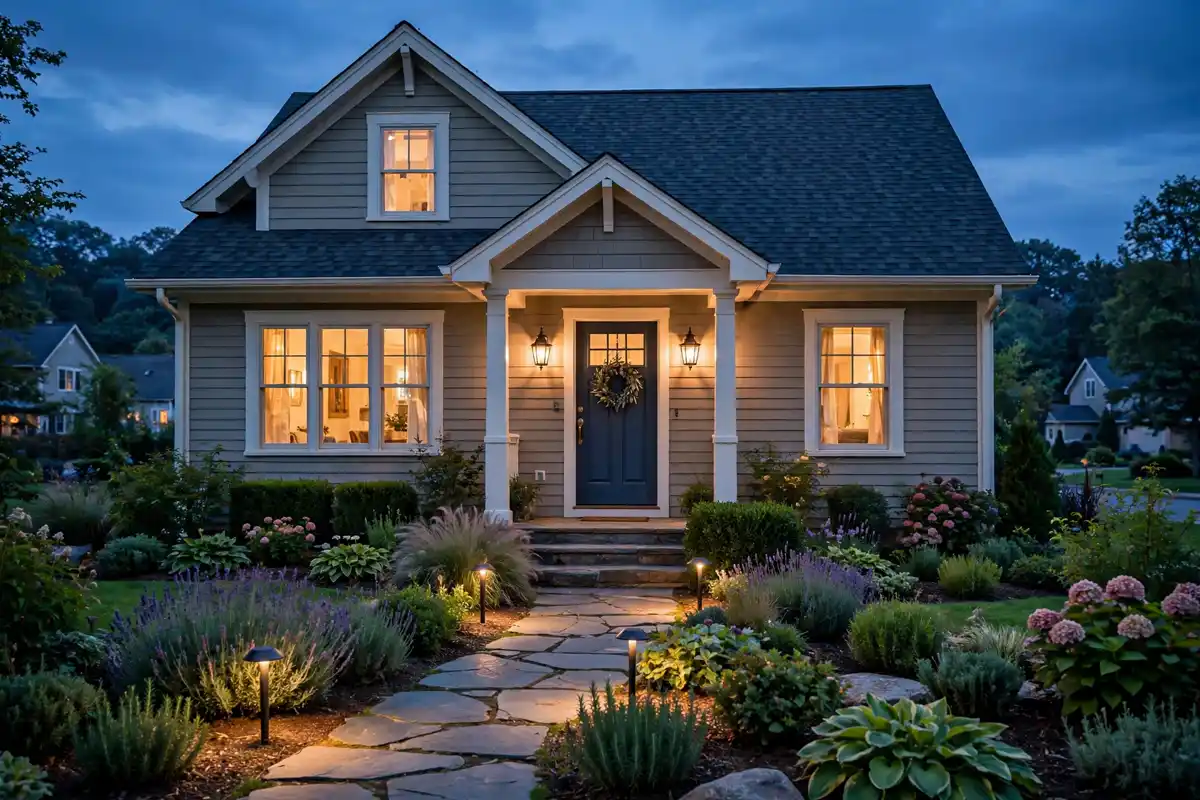
Most homes don’t need a fortress; they need layers. Security professionals think in terms of deterrence, detection, and delay — make the home look occupied and unappealing from the street, notice quickly if someone tries anyway, and make entry slow and noisy if they persist. Cameras, lighting, locks, and alarms each handle a different layer, which is why this guide works through all four for both renters, who can’t drill or rewire freely, and homeowners, who can.
One honest note before the shopping list: no device guarantees safety, and local rules on cameras, recording, and landlord permission vary. The aim here is a sensible, well-understood setup, not the most expensive one.
Start with the free and nearly free layer
Before buying anything, walk your street and look at your own home the way a stranger would:
- Sightlines. Overgrown hedges against windows and fences that hide the front door are invitations. Trim growth back so doors and windows are visible from the road.
- Signs of absence. Mail piling up, bins left out for days, and a permanently dark house advertise an empty home. Timers on lamps, a neighbor collecting post, and pausing deliveries fix most of this.
- Easy access. Ladders, loose tools, and unlocked side gates and sheds hand someone their equipment and their route in. Lock them away.
- Numbers and lights. A visible house number helps emergency services find you fast — an underrated security feature.
Lighting: the cheapest deterrent that works every night
Good exterior lighting removes hiding places and signals an alert household. The essentials:
- Motion-sensor lights at the front door, back door, and any side path. Solar models suit renters and homes without exterior wiring; hardwired models suit homeowners who want reliability in all weathers.
- Smart bulbs or timers indoors so light patterns change when you’re away. A single lamp on a fixed timer is obvious within a few evenings; varied schedules look lived-in.
- Warm, downward-facing light rather than glaring floodlights that annoy neighbors and create deep shadows beside their own glare.
Lighting also has a décor dividend: the same layered approach indoors makes rooms feel finished, as our small home makeovers guide explains.
Locks: the layer that actually delays entry
Cameras record and alarms announce, but locks are what physically slow someone down:
- Deadbolts on exterior doors are the baseline for homeowners; check that strike plates are fixed with long screws into the frame, not the short screws many doors ship with.
- Window locks and patio-door bars close off the most commonly forced entry points after doors.
- Renters: ask the landlord before changing locks — many leases require it, and some landlords will happily approve or even pay for an upgrade. Portable options include door-reinforcement bars, window lock additions that clamp rather than screw, and smart locks designed to fit over an existing deadbolt, leaving the original key working and the fitting removable at move-out.
- Keys discipline. Spare keys under mats and plant pots are the first places anyone looks. Use a lockbox or leave spares with a trusted neighbor instead.
Cameras: what they do and don’t do
Cameras are detection and evidence, not a barrier. Position and expectations matter more than megapixels:
- Video doorbells cover the front door and parcel deliveries and suit renters well, since many run on batteries and mount on a bracket or adhesive plate.
- Outdoor cameras should cover entry points at head height — high corners mostly record the tops of heads. Aim them at doors and driveways, not at neighbors’ windows or private spaces; privacy rules for recording beyond your property differ by place, so check yours.
- Indoor cameras divide opinion. If you use them, common areas only, never bedrooms or bathrooms, and tell household members and regular guests.
- Storage choices are the real fork in the road: subscriptions store clips in the cloud for a monthly fee per device or household plan, while local storage (memory cards or a home hub) avoids fees but keeps footage in the house. Prices and plans change constantly, so compare current terms rather than trusting any fixed figure.

Smart alarms and sensors: the noisy layer
A basic smart security setup combines a hub, door and window contact sensors, a motion sensor or two, and a siren. When a sensor trips while the system is armed, you get a phone alert and the siren makes the property a loud, time-limited problem for anyone inside.
- Self-monitored systems send alerts to your phone and cost little or nothing monthly; they depend on you seeing the alert.
- Professionally monitored systems add a response center that can contact you and, depending on the service and region, emergency contacts or services, for a recurring fee.
- Renters: adhesive sensors and no-drill hubs move with you from home to home, which makes them one of the most renter-friendly upgrades available.
- Battery and connectivity: sensors run for long periods on small batteries; systems differ in whether they keep working during power or internet outages, so check for cellular backup if that matters to you.
Homeowners should also note that insurers sometimes ask about alarms and locks, and declared security features can form part of your policy picture — our guide to home insurance and renovation explains how home changes and your cover interact.

Putting it together on two budgets of effort
Renter’s starter setup: video doorbell (battery), adhesive door/window sensors with a phone-alert hub, lamp timers, motion light by the door if your landlord agrees, and better habits around spare keys and deliveries.
Homeowner’s core setup: quality deadbolts and window locks, motion lighting on all approaches, doorbell plus one camera covering the driveway, contact sensors on ground-floor doors and windows, and a monitored or self-monitored alarm — then review it once a year.
Frequently Asked Questions
What is the best first home security purchase?
For most homes, good locks and exterior lighting come before electronics: a solid deadbolt and a motion light at each entrance deter and delay around the clock with no subscription. A video doorbell is usually the best first electronic device.
Can renters install home security without drilling?
Yes. Battery video doorbells, adhesive contact sensors, plug-in smart bulbs and timers, and smart locks that fit over an existing deadbolt all install without drilling and remove cleanly. Check your lease and ask your landlord before anything that changes locks or fixtures.
Do security cameras actually prevent break-ins?
Visible cameras can deter opportunistic attempts and are valuable for evidence and alerts, but they don’t physically stop entry. They work best as one layer alongside lighting, locks, and an alarm rather than as your only measure.
Is a monitored alarm worth the monthly fee?
It depends on how often the home is empty and whether you reliably respond to phone alerts. Monitoring adds a human response chain when you’re asleep, traveling, or without signal; self-monitoring suits many households at lower ongoing cost.
Layers, not gadgets
A secure home is a system, not a shopping cart. Light the approaches, lock the obvious entries, add detection where you sleep or travel, and keep the whole setup maintained. Whether you rent or own, the layered approach scales from a single doorbell to a full system without wasting money at any step.